A plain-language guide for business leaders, with examples from seven industries and an overview of grants and tax incentives in Singapore
Ask three departments for last quarter’s revenue and there is a fair chance you will get three different answers. Sales takes its figure from the CRM, finance from the accounting system, and operations from whatever tool tracks orders and deliveries. None of them is wrong. They are looking at different systems that were never designed to agree with one another.
For most organisations, this is the real data problem. It is rarely a shortage of information. The information is spread across systems, defined differently by each team, and stitched together by hand whenever someone needs an answer.
A data platform is how organisations fix that. This article explains what a data platform does in business terms, how it supports the goals most leadership teams care about, and what it looks like across seven industries. It also covers the grants and tax incentives available to businesses in Singapore. If you are responsible for a function, a business unit or a P&L rather than for IT, it is written for you. If you are evaluating platforms from a technical or procurement perspective, our enterprise data platform buyer’s guide covers architecture, governance and RFP preparation.
What a data platform is, in business terms
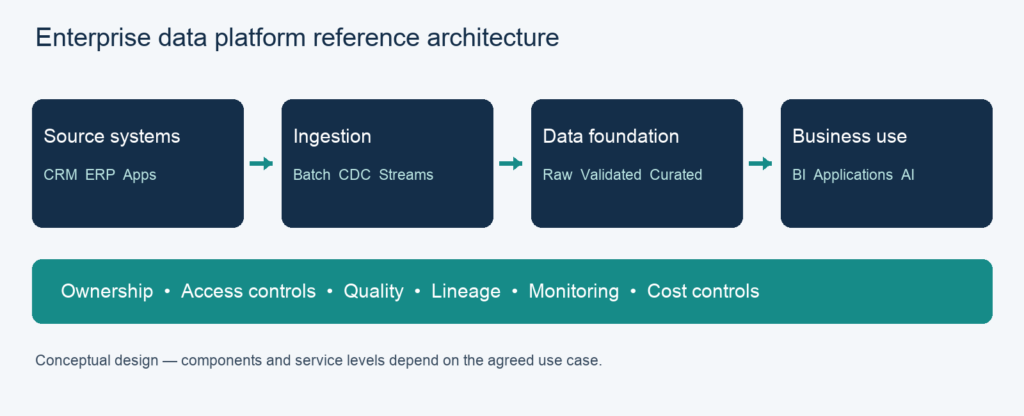
Put simply, a data platform is a central place where information from your business systems is brought together, checked and organised so that everyone can use it with confidence.
It works alongside the systems you already have. Your CRM keeps managing customers, your ERP keeps running finance and supply, and your operational tools keep doing their jobs. The platform collects data from each of them, applies agreed definitions, such as what counts as an active customer, how revenue is recognised or what “on time” means, and makes the result available for reports, dashboards, automated processes and AI tools.
The closest comparison inside most companies is the finance function. Every department records its own transactions, but finance consolidates them into one set of accounts that the board can trust. A data platform does the same job for the rest of the business’s information.
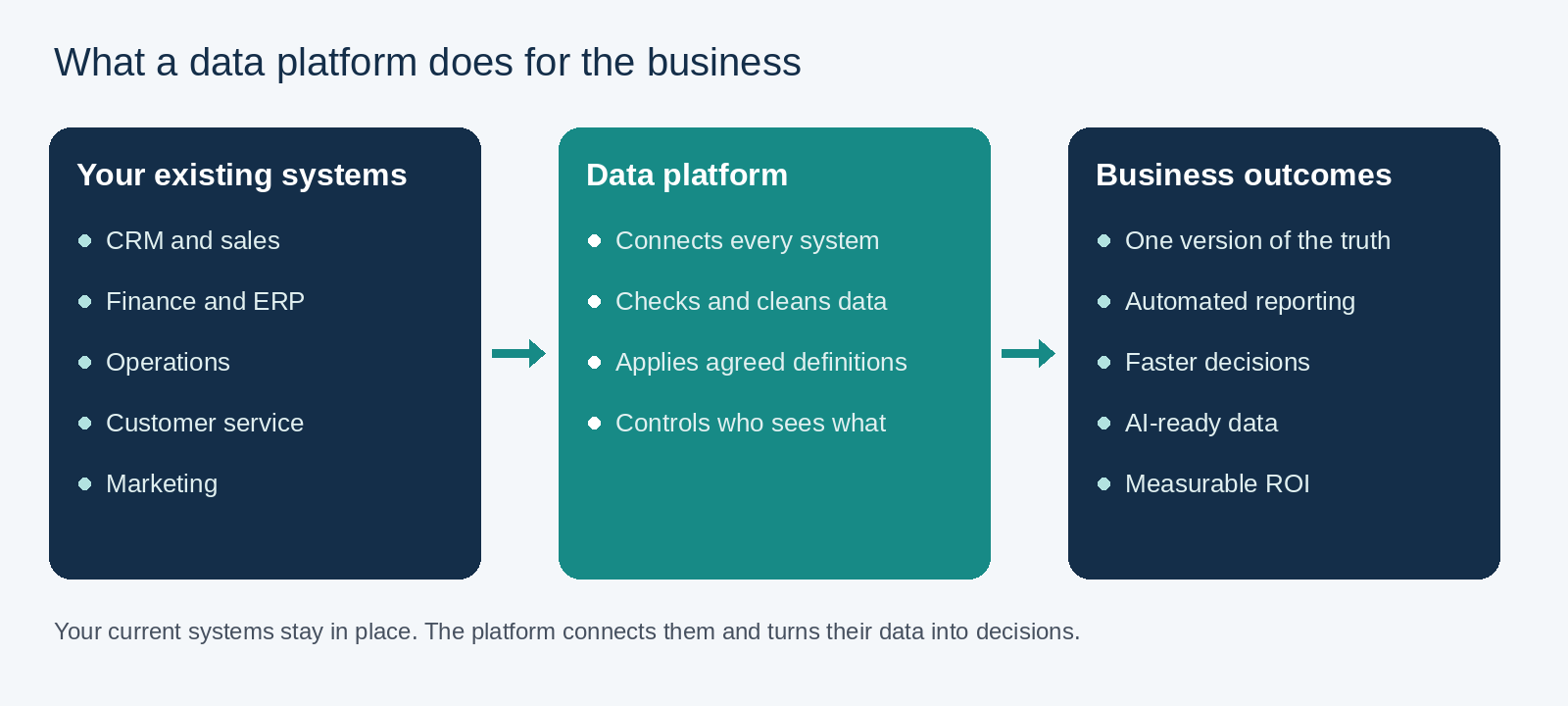
Figure 1. A data platform connects the systems you already use and turns their data into business outcomes.
How a data platform supports your business goals
Few leaders invest in a data platform for its own sake. They invest because it helps them reach goals they already have. Here is how it connects to the ones that come up most often.
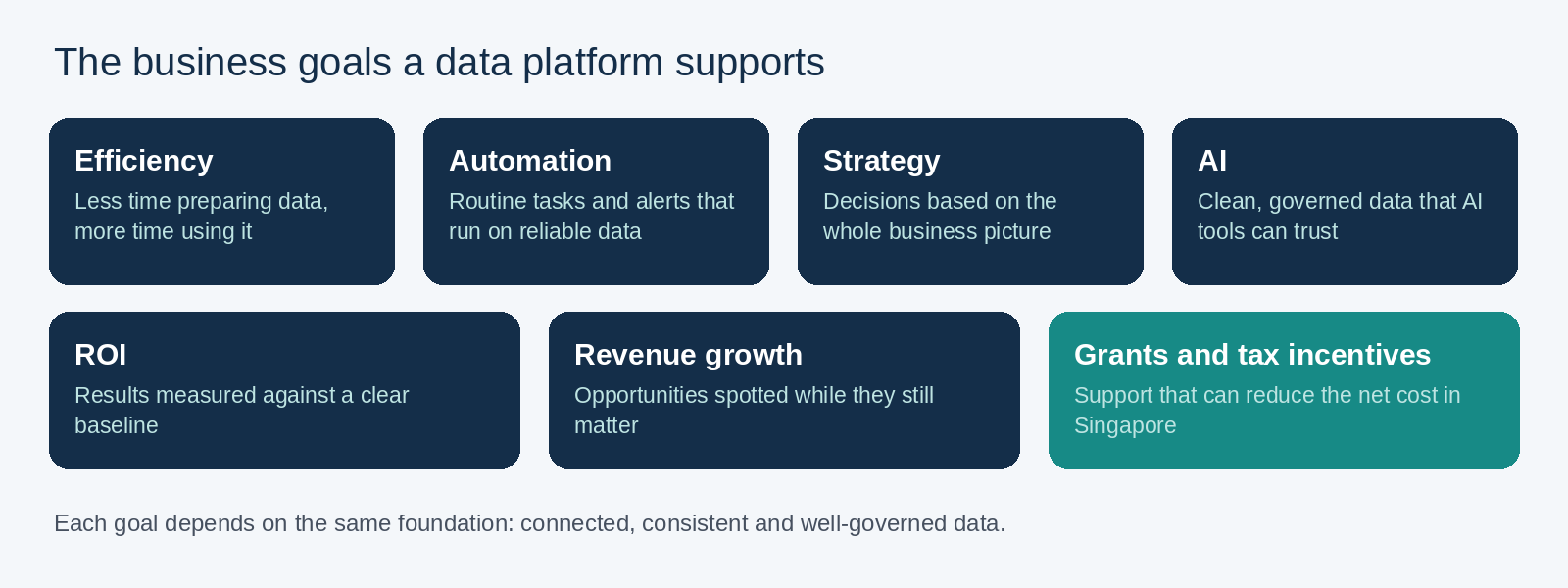
Figure 2. The business goals a data platform supports.
Efficiency
In many businesses, capable people spend hours each week exporting reports, copying figures between spreadsheets and working out why two numbers do not match. Under the current setup that work is necessary, but it adds little value.
A data platform removes most of it. Data arrives from source systems on a schedule, it is checked along the way, and the reports people rely on update themselves. The time that went into assembling numbers can go into understanding them. Just as important, information reaches decision-makers sooner, while there is still time to act on it.
Automation
Automation depends on data that is complete, current and consistent. When it is, routine tasks can run without anyone having to remember them: an alert when stock falls below a threshold, a note to an account manager when a customer’s activity drops, a daily report of deliveries that missed their window.
Without a reliable foundation, automation tends to repeat mistakes faster rather than remove them. That is why organisations that want to automate more of their operations usually find they need to sort out their data first.
Strategy
Most strategic questions cut across departments. Which customers are profitable once service and delivery costs are included? Which markets deserve more investment? Which products bring customers back for a second purchase? Each answer needs data from several systems at once.
A data platform makes those questions practical to answer. Instead of commissioning a one-off analysis that takes weeks and is out of date by the time it is presented, leaders can see the combined picture routinely and test their assumptions against it.
AI
AI is on the agenda in almost every boardroom, but AI tools are only as good as the data behind them. A forecasting model needs a clean and consistent history. An assistant that answers questions about sales performance needs to know what each metric means and who is allowed to see which figures. A tool that recommends actions needs data that reflects what is happening now.
A data platform provides that groundwork. It gives AI initiatives organised, governed and documented data to work from, which is what turns them from promising experiments into tools people use every day.
ROI
A data platform should be judged like any other investment: by what it returns compared with what it costs. Returns usually come from time released from manual reporting, costs avoided through fewer errors and missed deadlines, revenue gained from better decisions about customers and pricing, and risk reduced when compliance and board reporting become more reliable. On the other side are the cost of building the platform, ongoing software and cloud fees, support, and the time your own team contributes.
The most useful step is to measure where you stand before the project begins. How long does monthly reporting take? How often are figures corrected after they are published? How quickly can a question that spans departments be answered? With that baseline in place, the return can be shown rather than estimated after the fact. It also helps to be precise about time savings. Hours saved become a cash saving only when spending changes; otherwise they are capacity that can be redirected to more valuable work.
Revenue growth
Many revenue opportunities only become visible when data from different systems is put side by side. A customer whose product usage is declining while support requests rise may be about to leave. An account that has grown steadily may be ready for a larger contract. Some products consistently sell together, and some marketing channels bring in customers who stay for years while others bring in one-off buyers.
When sales, marketing and customer data sit in separate places, these patterns are easy to miss. A data platform brings them into view, so commercial teams can act on them while they still matter.
Grants and tax incentives
For businesses operating in Singapore, government support can reduce the cost of investing in data and AI. The summary below reflects publicly announced information as of October 2026. Schemes and eligibility rules change, so confirm the details with the relevant agency and your tax adviser before committing spend.
Scheme | What it offers | Points to note |
|---|---|---|
Enterprise Development Grant (EDG) | Co-funding for qualifying business transformation projects | Up to 50% support for eligible SMEs; non-SMEs receive a lower share |
Productivity Solutions Grant (PSG) | Support for pre-approved digital solutions | Expanded in Budget 2026 to cover more AI and AI-enabled tools |
EDGE (announced in Budget 2026) | Brings EDG, PSG and Market Readiness Assistance together in one scheme | Will be open to all Singapore businesses, including non-SMEs; existing grants remain open in the meantime |
Enterprise Innovation Scheme (EIS): AI adoption | 400% tax deduction on up to S$50,000 of qualifying AI adoption spend per year | Applies for YA 2027 and YA 2028; cannot be converted into a cash payout |
Champions of AI | Tailored support and expert partners for enterprise-wide AI transformation | For leading companies; being piloted with a small group |
Enterprise Singapore has confirmed that EDGE streamlines MRA, PSG and EDG into a single scheme, and that businesses can keep applying for the existing grants through the Business Grants Portal until it launches. IRAS lists the new AI adoption deduction under the Enterprise Innovation Scheme alongside the scheme’s existing activities, such as R&D and approved training. Larger organisations planning a broad AI programme can look at the Champions of AI programme run by Enterprise Singapore and Digital Industry Singapore.
Depending on the nature of the expenditure and the rights acquired, investments in enterprise software and data platforms may qualify for capitalisation as intangible assets, with associated intellectual property (IP) recognised where applicable. Certain costs may also qualify for tax deductions or capital allowances under Singapore tax rules, subject to the relevant IRAS requirements.
IP ownership should be agreed in the development contract; commissioning bespoke software does not automatically establish ownership of all underlying components. Accounting capitalisation and tax deductibility are separate assessments.
Timing matters. Grant schemes generally do not cover costs committed before an application is submitted, so plan the funding alongside the project rather than after it. Applications are assessed in business terms: what the project aims to achieve, what it involves and how its results will be measured. This section is general information, not tax or financial advice.
Which business goal should your data platform support first? Talk to ENGINE about the reporting bottleneck, manual process or growth opportunity you want to address, and discuss a focused starting point.
What a data platform looks like in your industry
The principles are the same in every sector. What differs is where the first and most visible value tends to come from. The table gives a quick overview, and the sections that follow explain each industry in more detail.
Industry | Typical data sources | Where value often starts | What to measure |
|---|---|---|---|
SaaS | Product usage, billing, CRM, support | Early warning on churn and upsell | Revenue retention, churn rate |
Healthcare and life sciences | Scheduling, staffing, supply, quality and research systems | Capacity planning and operational reporting | Waiting times, utilisation, reporting effort |
Logistics, aviation and maritime | Transport and warehouse systems, tracking, schedules, maintenance | Visibility of delays and cost-to-serve | On-time performance, asset utilisation |
Advanced manufacturing | Machine data, production, quality, ERP | Equipment performance and quality | Downtime, scrap and rework, yield |
Financial services | Core systems, CRM, transactions, risk | Single customer view and regulatory reporting | Reporting cycle time, cross-sell, risk alerts |
Energy | Meters and sensors, asset records, market prices, weather | Demand forecasting and asset performance | Forecast accuracy, asset availability, emissions |
Retail | Point of sale, ecommerce, marketplaces, inventory, marketing | One view of sales and stock | Stock-outs, sell-through, margin by channel |
SaaS
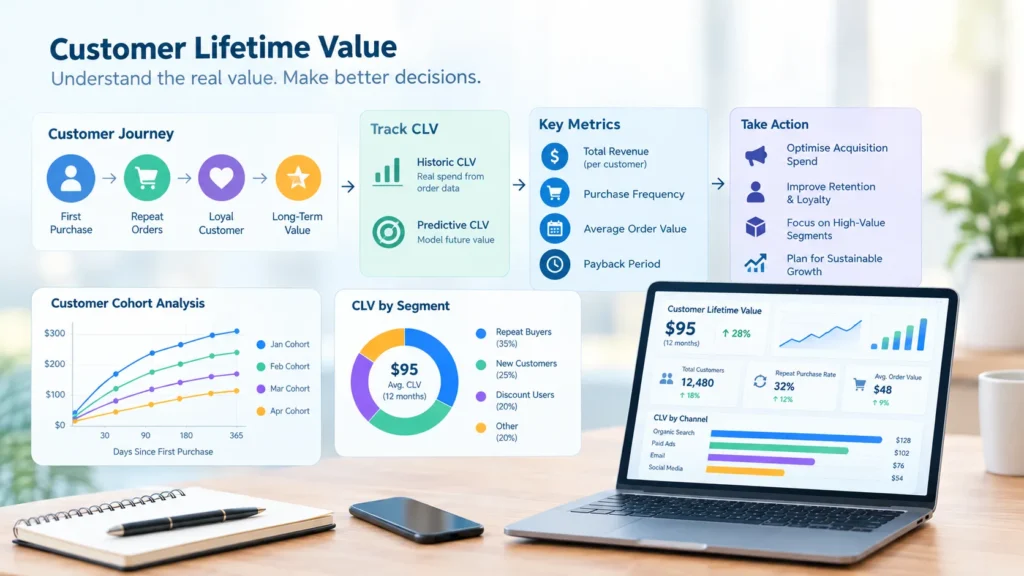
SaaS businesses live on recurring revenue, so understanding how customers behave over time is central to growth. Product usage sits in the application, subscriptions in the billing system, conversations in the CRM and tickets in the support desk. Bringing them together gives a reliable view of recurring revenue, churn, expansion and lifetime value. It also makes early warning possible: accounts whose usage is falling, or whose support requests are climbing, can be flagged well before renewal. Product teams can see which features keep customers engaged, and finance can forecast with more confidence.
Healthcare and life sciences
Healthcare and life sciences organisations hold some of the most valuable and most sensitive data of any sector. For providers, combining operational information such as appointments, bed occupancy, staffing and supplies supports better capacity planning and can make quality and regulatory reporting faster and more consistent. For life sciences companies, linking research, manufacturing and commercial data helps with study reporting and supply planning. In both cases, access controls and audit trails need to be designed in from the start.
Logistics, aviation and maritime
In logistics, aviation and maritime, margins depend on having the right assets in the right place at the right time. Data comes from transport and warehouse systems, tracking devices, schedules, maintenance records and partners. Bringing it together supports on-time performance tracking, earlier warning of delays, better use of fleet and capacity, maintenance planned around actual usage, and a clear view of the cost of serving each customer or route. It also makes it easier to give customers up-to-date visibility of their shipments without manual updates.
Advanced manufacturing
Modern factories produce large volumes of machine and process data, but much of it stays on the shop floor, disconnected from planning and finance. Combining production, quality, maintenance and supply chain data helps teams track equipment performance, spot quality issues earlier, plan maintenance before breakdowns, and align production with demand. Linking that data to costs also shows the true margin of each product line, which informs pricing and investment decisions.
Financial services
Banks, insurers, asset managers and payment firms are among the most data-intensive businesses there are. A well-governed platform supports a single view of each customer across products, faster and more consistent regulatory reporting, stronger risk and fraud monitoring, and more relevant offers to customers. In a regulated sector, traceability is part of the value: being able to show where a reported figure came from, and who changed what, matters as much as the analysis itself.
Energy
Energy producers, distributors and large energy users manage complex physical assets against supply and demand that is increasingly hard to predict. Combining meter and sensor readings, asset records, market prices and weather data supports demand forecasting, asset monitoring and maintenance planning. A platform also helps with sustainability and emissions reporting, which many organisations now need to produce with the same care as their financial results.
Retail
Retailers sell through stores, websites, marketplaces and social channels, each with its own system. A data platform brings sales, inventory, customer and marketing data together so the business can see performance by product, channel and location in one place. That supports better stock allocation, more accurate demand planning, marketing spend focused on customers who come back, and a clear view of margin after discounts, delivery and returns.
Talk to ENGINE about your data
If your teams spend too much time preparing reports, your systems do not share information, or you want AI to become part of how your business runs, the best place to start is a conversation about your goals rather than your technology.
Ready to turn your business goals into a data platform brief? Contact ENGINE with your priorities, current systems and timeline to discuss the next step. If you already have a project brief or RFP, share it through the contact page. Explore our data engineering, analytics and AI services or our internal communications analytics case study for more context.
Frequently asked questions
Do we need to replace our existing systems?
No. A data platform connects the systems you already use, such as your CRM, ERP and operational tools. They keep running the business, and the platform brings their information together so it can be used consistently.
Is a data platform only for large enterprises?
No. The scale differs, but the idea applies to any organisation whose decisions depend on information held in several systems. Many start with one priority area and expand from there.
Can grants or tax incentives reduce the cost?
They can, for eligible businesses in Singapore. Options include the EDG and PSG, the upcoming EDGE scheme and the AI adoption deduction under the Enterprise Innovation Scheme. Eligibility depends on your company and project, so check with the relevant agency and your tax adviser before committing spend.