An enterprise buyer’s guide to architecture, governance, delivery and RFP preparation
An enterprise data platform becomes a board-level investment when fragmented data starts affecting financial reporting, operational decisions or the ability to deliver new services. The procurement challenge is to specify a system that produces dependable business outputs, with clear ownership and a sustainable operating cost.
Start by separating three problems: inconsistent business definitions, unreliable movement of data and insufficient controls. They can coexist, but they require different remedies. A new warehouse will not settle a disagreement about revenue recognition, and a new dashboard will not repair missing source records.
An enterprise data platform provides the shared capabilities to ingest, organise, govern and deliver data for business use. The investment should be judged by the decisions and workflows it improves, the risks it controls and the cost of operating it. This guide explains what to specify before choosing technology or inviting implementation proposals.
What an enterprise data platform needs to do
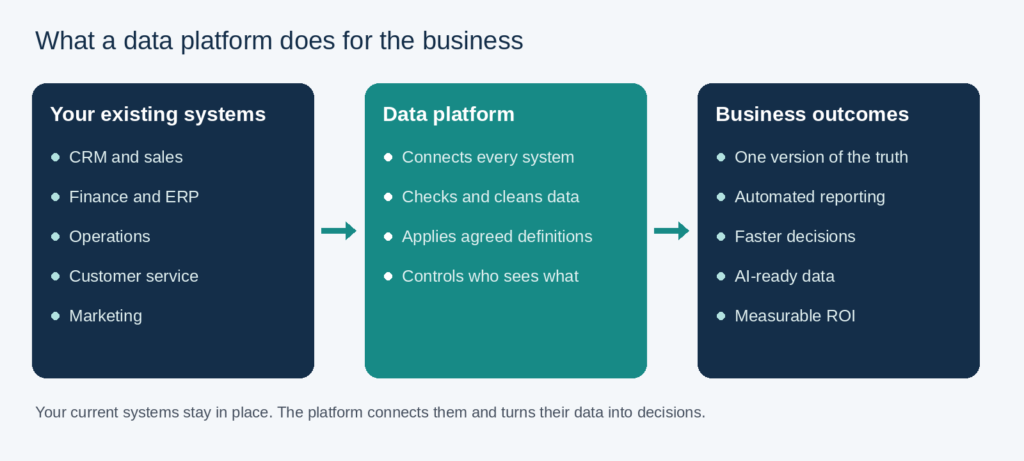
An enterprise data platform is a combination of technology, operating processes and accountable people. It connects source systems to reusable data products: datasets, metrics, reports or services with defined consumers, owners and quality expectations.
A warehouse can be a central component, but the platform also needs reliable ingestion, transformation, access control, monitoring and a way to manage change. A dashboard is a consumer of these capabilities. It does not replace them.
Consider a regional revenue model. Delivering it requires more than combining CRM and billing tables. Someone must decide how to recognise revenue, handle refunds, map subsidiaries and convert currencies. Engineering must implement those rules, finance must approve them, and downstream users must know when the figures are complete. The platform makes that agreement repeatable.
Establish whether you need modernisation or a smaller repair
A platform programme deserves evaluation when recurring problems cross systems or business units and targeted repairs cannot meet the agreed requirements. Typical signals include repeated reconciliation of the same metrics, duplicated pipelines, uncertain access permissions, slow onboarding of new sources and growing support demands on a few specialists.
However, not every reporting problem calls for a rebuild. If ingestion is dependable and the main issue is a poorly defined KPI, repairing the semantic model may be sufficient. If one source regularly arrives late, fixing that integration can be more valuable than migrating the warehouse.
Start with a diagnostic question: which business decision is delayed or unreliable, and what exactly prevents improvement? Trace the answer through source data, definitions, controls and delivery. This establishes whether the constraint is architectural, operational or local to one workflow.
Write the business requirements before selecting tools
Choose an initial use case with a business sponsor, accessible source data and measurable acceptance criteria. Enterprise revenue reporting, customer profitability or operational performance can be suitable starting points when the organisation can define a clear owner and decision.
The first brief should answer five questions. Who will use the output? What decision will change? How fresh must the data be? What would make the output untrustworthy? Who can approve the definitions and accept delivery?
Be precise about latency. Daily finance reporting and a customer-facing operational alert have different requirements. Streaming introduces additional engineering and operational demands; select it when the business needs faster action, rather than because real-time processing sounds more advanced.
Separate mandatory requirements from preferences. A required processing region, an existing identity provider or a recovery objective may constrain the design. A preferred dashboard tool may be negotiable. Documenting that distinction gives vendors room to propose better solutions without overlooking essential controls.
A reference architecture that makes responsibilities visible
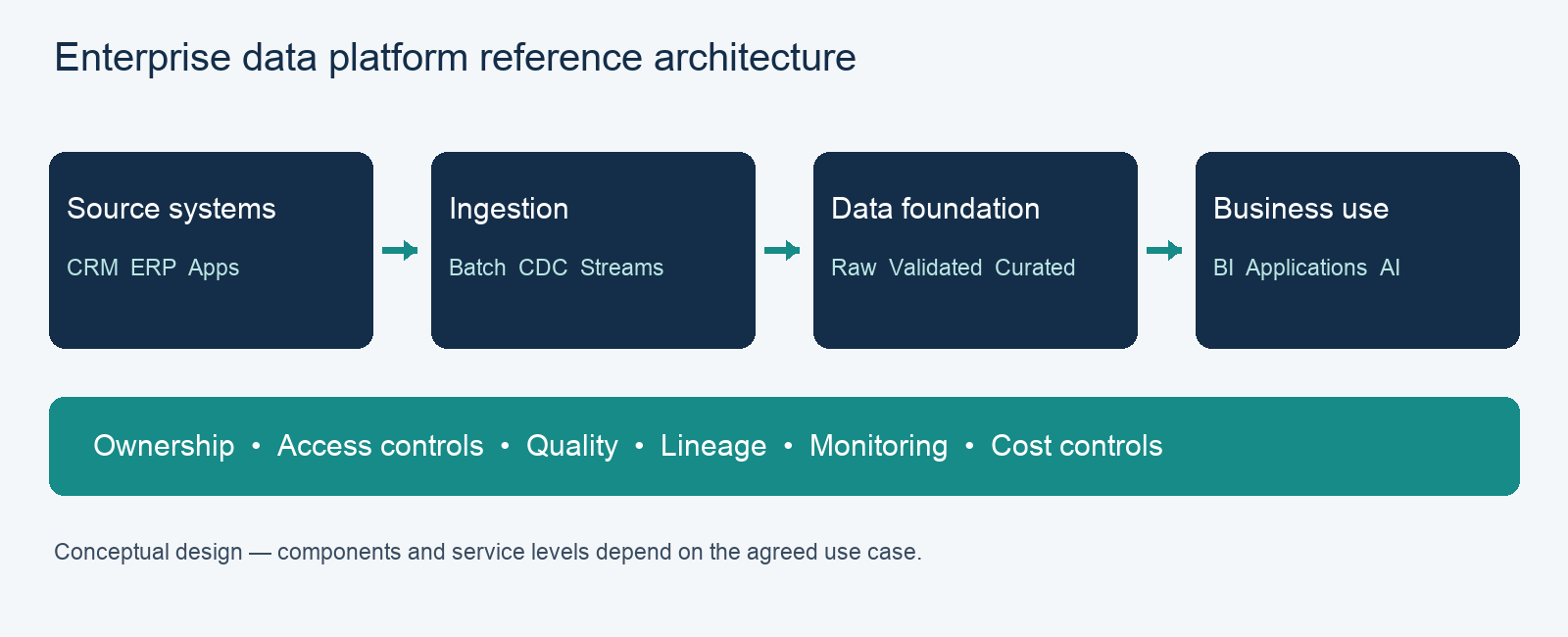
Figure 1. A conceptual platform with shared governance and operational controls.
A practical architecture separates responsibilities so that teams can understand where a failure occurred and who needs to act. The exact products and deployment pattern will vary.
Source systems include operational databases, CRM, ERP, product applications and external services. Ingestion moves the required records through scheduled extracts, APIs, change data capture or streams. The choice depends on source capabilities, permitted load and freshness requirements.
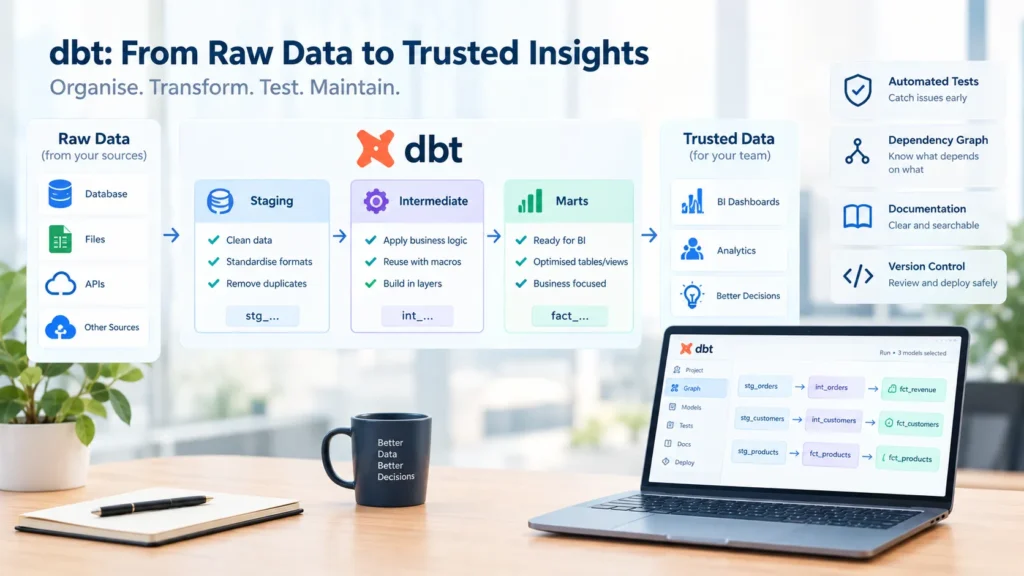
A landing layer retains enough source history to support investigation and reprocessing, subject to retention and access policies. A transformation layer validates records and applies business rules. Curated datasets and a semantic layer expose approved definitions to BI, applications and authorised AI workloads.
Governance and operations run across every stage. A lineage view should help a team trace an incorrect result back to its inputs. Monitoring should identify a missing delivery before a business user discovers a blank dashboard. A change process should reveal which consumers will be affected when a source field changes.
Google Cloud’s enterprise analytics reference architecture illustrates how security and governance controls can sit alongside platform services [1]. It is one implementation reference, rather than a universal blueprint for every organisation.
Choose a warehouse or lakehouse around workloads
Decision | Warehouse-led approach | Lakehouse approach |
|---|---|---|
Starting workload | Structured reporting and SQL analytics | Mixed analytics, files and data science |
Validate before choosing | Metric modelling, concurrency and query cost | Table management, engine compatibility and operations |
Governance test | Permissions persist through BI and exports | Permissions persist across engines and file access |
Operational concern | Ingestion, transformations and workload isolation | Ingestion plus storage layout and optimisation |
Selection rule | Benchmark the actual workload and team skills | Benchmark the actual workload and team skills |
A warehouse-led design can suit organisations whose main needs are structured analytics, SQL transformations and business reporting. A lakehouse approach may deserve consideration when workloads span large file collections, engineering, data science and analytics over shared data.
These categories overlap. Product capabilities evolve, and a label alone will not determine performance, governance or cost. Evaluate candidate designs against representative workloads, including difficult joins, historical backfills, concurrent users and the expected mix of structured and unstructured information.
A layered lakehouse pattern commonly separates raw, validated and business-ready data. Databricks describes this as a medallion architecture [2]. The useful principle is progressive refinement with explicit quality expectations; adopting bronze, silver and gold names does not itself make a platform reliable.
A multi-cloud design also needs a reason. It may reflect acquisitions, existing contracts or residency constraints. It can introduce additional movement, administration and integration costs. Request a clear explanation of what must cross cloud boundaries and why.
Treat governance as an operating agreement
Enterprise governance begins with ownership. Each important data product needs a business owner who approves its meaning and an operational owner who maintains delivery. Security teams define access expectations; engineering implements and tests the controls.
Define how users request access, who approves it and when it is reviewed. Sensitive fields may require masking or more granular restrictions. Record retention, deletion and audit expectations before replicating information into additional systems.
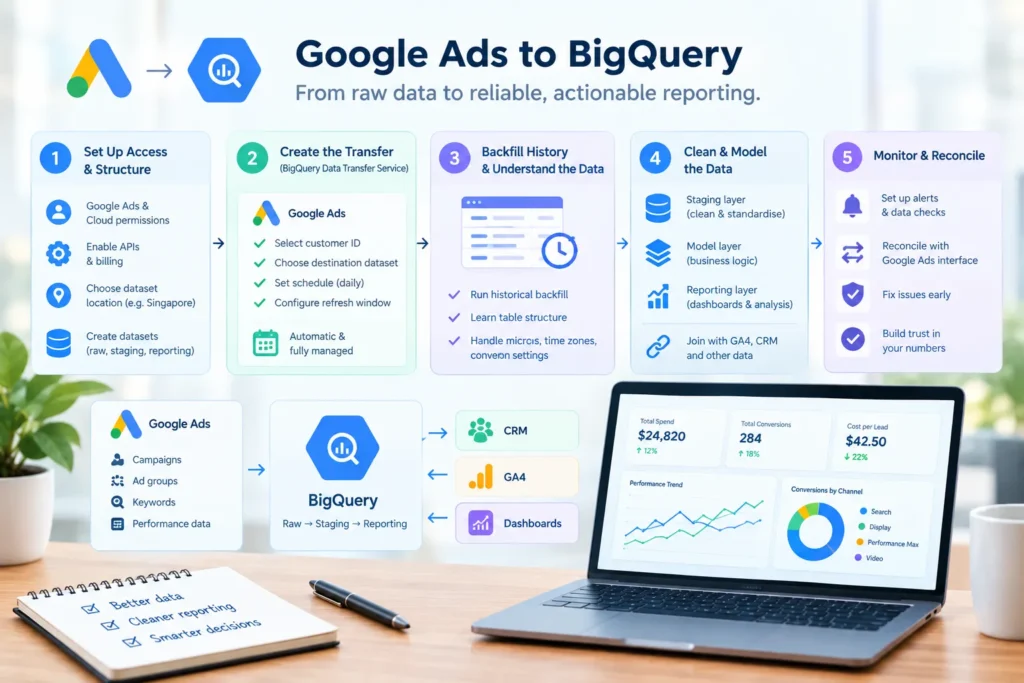
Platform features can support this work. BigQuery, for example, documents access controls, masking, audit logging, lineage and data quality capabilities [3]. Buyers still need to establish which controls apply, configure them and verify that they work in the intended design.
For regional organisations, map where data is collected, processed, stored and accessed. Include backups, support arrangements and subprocessors in the review. Have the relevant privacy and security stakeholders determine applicable obligations; choosing a local hosting region alone does not settle the entire governance question.
Specify reliability in terms the business can test
A successful pipeline run is not proof that the output is correct. A job may complete while delivering incomplete records, stale data or duplicated transactions.
Define service expectations for critical data products. Specify the delivery deadline, completeness checks, reconciliation tolerances, escalation owner and behaviour when a check fails. Some outputs should be held back; others can remain available with an explicit freshness warning.
For a revenue dataset, useful tests might reconcile totals against an approved finance source, detect duplicate transaction identifiers and identify missing currencies. Thresholds should reflect the business process and its risks. Avoid arbitrary targets that look precise but have no operational basis.
Ask how the platform handles late records, source schema changes and backfills. Require a recovery demonstration appropriate to the workload. Recovery point and recovery time objectives describe different concerns: acceptable data loss and acceptable time to restore service. Agree both with the business owner.
Do not confuse cloud availability with recovery of the business workflow. BigQuery’s documentation, for example, explains that selecting a multi-region does not itself provide cross-region replication or regional redundancy [7]. Recovery planning must also cover ingestion, transformation code, identity, orchestration and downstream applications.
An example acceptance test for daily revenue reporting
Suppose a finance team needs the previous day’s revenue by 08:00 Singapore time. An illustrative delivery contract would require approved reconciliation rules, no duplicate transaction identifiers in the curated output, a freshness indicator and an alert to the named owner if a required source is late. If reconciliation fails, the report should show its last validated refresh rather than silently publish incomplete totals.
Test a source schema change, a duplicate delivery, a missed extract and a replay after failure. Reprocessing should not double-count transactions. Agree tolerances, escalation times and the cutover evidence with finance before implementation; these examples are not promised ENGINE service levels.
Planning your platform requirements? Contact ENGINE to discuss your priority use case, governance requirements and acceptance criteria before finalising your architecture or RFP.
Build a business case that includes operating costs
Compare the cost of the current process with the full cost of the proposed service. Include engineering and implementation, subscriptions, storage, compute, data movement, monitoring, support, training and the temporary overlap between old and new systems.
A useful model is annual net benefit equals validated annual benefits minus incremental annual operating costs. Estimate payback against the initial delivery investment only after agreeing which benefits are credible and when they begin. Time saved is capacity released; it becomes a cash saving only when expenditure actually changes.
Measure a baseline before implementation. Track reconciliation hours, delivery delays, incident frequency and time required to add a new source. After release, compare those measures over a representative period. Do not attribute every commercial improvement to the platform when other factors also changed.
Use scenario estimates for growth and usage. Ask vendors to show how costs change with more sources, historical data, concurrent users and refresh frequency. Google’s BigQuery guidance describes query estimates, workload controls and cost monitoring [4]. Equivalent controls should be evaluated for whichever technology is selected.
Public research supports the need for disciplined AI foundations
Google Cloud’s 2025 State of AI Infrastructure report, based on a survey of more than 500 global technology leaders, says 39% of surveyed organisations were deploying generative AI in production. The public report summary identifies data quality and security as leading challenges [6]. This is vendor-sponsored survey evidence, not a census of enterprises or a forecast of your organisation’s return.
For a buying team, the implication is practical: a successful demonstration is only one checkpoint. Require evidence that the underlying data, permissions and operating processes can support sustained use.
Make AI readiness a separate acceptance discussion
A platform can support AI without making every dataset suitable for every AI application. The requirements depend on whether the use case is forecasting, natural-language analytics, document retrieval or an agent that performs business actions.
For natural-language analytics, consistent metric definitions and permission-aware query access matter. Document retrieval also needs current content, source references and appropriate retrieval permissions. An agent that can update business systems requires additional restrictions, monitoring and approval rules for consequential actions.
Evaluate outputs against representative business questions and failure cases. Ask what happens when an answer is unsupported, a source is stale or a user lacks permission. Keep read access and action permissions explicit. Adding an AI interface should not widen access to information the user could not otherwise obtain.
Deliver in phases with clear release gates
Begin with discovery. Inventory the sources needed for the first use case, confirm access and ownership, document constraints and agree acceptance criteria. Discovery should produce an actionable scope, an architecture recommendation and a record of unresolved dependencies.
Next, establish the foundation: environments, identity integration, deployment process, monitoring and the essential controls. Deliver one complete use case through those foundations rather than building a large collection of disconnected components.
Before switching users, run the new output alongside the existing process. Reconcile differences, test permissions and rehearse recovery. Agree who can authorise cutover and how to return to the previous process if necessary.
Then expand using the patterns that proved effective. Add domains based on value and readiness. Retire old reports and pipelines deliberately, after dependency checks and owner approval. Without decommissioning, the organisation can end up paying for two platforms indefinitely.
Timelines should follow source access, integration complexity, security review and acceptance requirements. An initial release plan is useful; a universal promise to transform an enterprise platform within a fixed number of weeks is not.
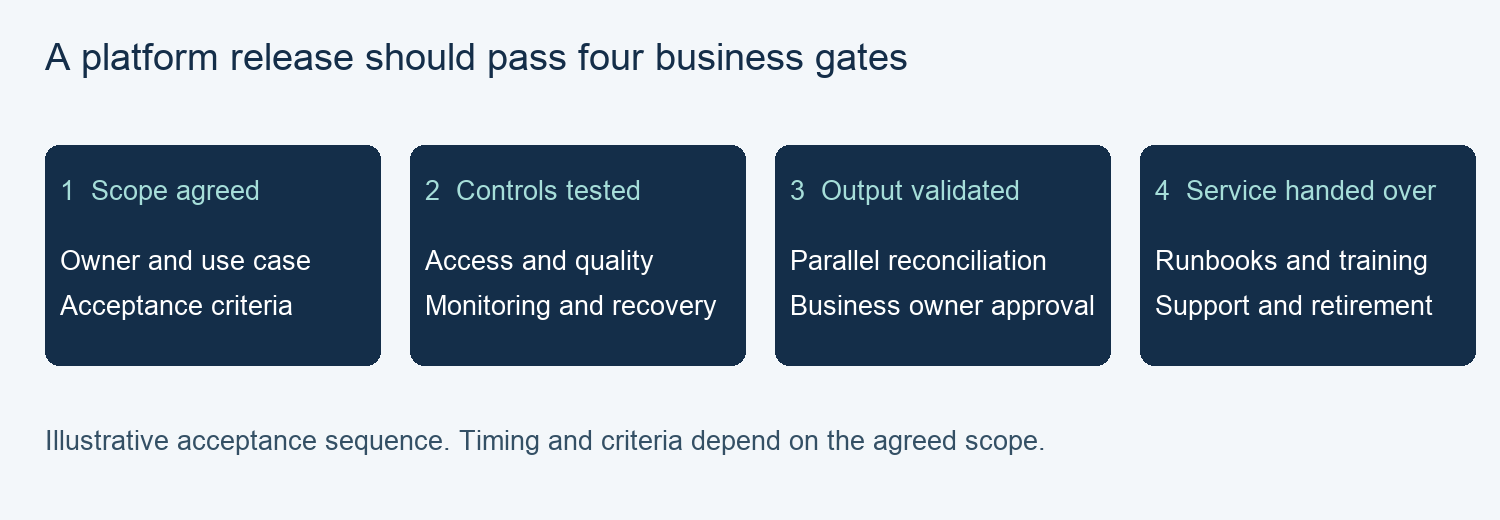
Figure 2. Release gates link technical completion to business acceptance and operational handover.
What enterprise analytics delivery looks like in practice
ENGINE’s published internal communications analytics case study describes work for a global technology and e-commerce enterprise spanning several regions. The engagement addressed KPI consistency, engagement segmentation, automated leadership reporting and a semantic model prepared for future AI use [5].
The distinction between preparation and deployment matters. The case study states that QTopics was not deployed in that phase. Its relevance is the work required beneath the interface: consistent definitions, usable models and automated reporting. Those foundations are also central to evaluating a broader platform programme.
Explore ENGINE’s data engineering, analytics and AI services to discuss which capabilities your organisation actually needs.
Evaluate proposals against the same evidence
Before comparing prices, establish pass or fail requirements for processing location, access controls, recovery, ownership and mandatory integrations. Score the proposals that satisfy those requirements on demonstrated workload performance, delivery assumptions, operating cost and handover quality. Agree the weights with technology, security, finance and procurement before suppliers present their solutions.
Ask for evidence rather than a feature tick: a representative benchmark with stated volume and concurrency; a tested recovery sequence; a sample runbook; and a cost model that identifies excluded services. Treat an untested capability as an assumption to resolve before contract award.
An enterprise data platform RFP checklist
A useful RFP gives suppliers enough context to make a defensible recommendation. You do not need a finished architecture before requesting help. You do need to expose the decisions, constraints and dependencies that affect scope.
Use the following checklist to prepare your brief.
- Business outcomes: name the first decisions or workflows to improve, the sponsor and the measures of success.
- Current environment: identify cloud providers, key applications, existing platforms, known pain points and contractual constraints.
- Data scope: list initial sources, approximate volumes, historical depth, update frequency and access dependencies.
- Consumers: describe users, expected concurrency, reports, downstream applications and AI use cases.
- Definitions and quality: identify critical metrics, reconciliation sources, required checks and approval owners.
- Security and governance: specify identity integration, classification, access review, audit, retention and processing-location requirements.
- Reliability: state freshness expectations, incident handling, recovery objectives and acceptance tests.
- Delivery: request phased milestones, assumptions, customer responsibilities, cutover planning and decommissioning criteria.
- Commercials: request implementation and operating estimates, usage assumptions, exclusions and change-control terms.
- Ownership and exit: clarify control of cloud accounts, code, models, documentation, credentials and transition assistance.
Ask each supplier to explain the trade-offs behind its proposed architecture. A credible proposal should identify uncertainty, distinguish included work from assumptions and describe the evidence needed for acceptance.
During evaluation, request a walkthrough of a representative failure: a source changes its schema just before an executive reporting deadline. Who detects it? Which outputs are affected? What does the user see? How is service restored? This discussion often reveals more about operational maturity than a polished dashboard demonstration.
Discuss your platform requirements with ENGINE
If your organisation is planning a new enterprise data platform or modernising an existing environment, start with the business outcome and the constraints that matter most.
ENGINE works across data integration, modelling, reporting and AI infrastructure. Share your current environment, priority use case, principal risks and intended procurement timeline through our contact page. If you already have an RFP, use the same page to share your brief and discuss scope.
Ready to scope your enterprise data platform? Contact ENGINE to request a scoping conversation or share your RFP. Include your current stack, priority workflow, security constraints and target procurement date. Please leave credentials and confidential datasets out of the initial enquiry.
Frequently asked questions
Can we modernise without replacing everything
Often, yes. Discovery should distinguish reusable components from the actual constraints. A phased approach can improve a priority workflow while retaining suitable source systems, infrastructure and reporting tools.
Do we need real-time data across the platform
No. Match freshness to the action the data supports. Some workloads need rapid updates; others benefit more from reliable scheduled delivery. Specify latency per use case instead of imposing one platform-wide requirement.
Should we choose a vendor before writing an RFP
You can request discovery support before committing to implementation. Separate the diagnostic deliverables from the later build so that architecture choices, assumptions and procurement decisions remain reviewable.
What should our organisation own after delivery
Agree this contractually. Address cloud accounts, repositories, transformation logic, infrastructure configuration, documentation, operational runbooks and access administration. Include knowledge transfer and an exit process so ongoing operation does not depend on undocumented supplier knowledge.
References
- Google Cloud — Enterprise analytics reference architecture
- Databricks — Medallion lakehouse architecture
- Google Cloud — Data governance in BigQuery
- Google Cloud — Estimate and control BigQuery costs
- ENGINE — Internal communications analytics case study
- Google Cloud — 2025 State of AI Infrastructure
- Google Cloud — BigQuery reliability and disaster planning