In today’s data-driven business environment, understanding and monitoring the right indicators is critical for success. Every organization generates vast amounts of data, but not all information is equally valuable. To drive meaningful growth, leaders must focus on Key Metrics—the measures that truly reflect performance, progress, and opportunity.
Key Metrics provide clarity, enabling companies to track success, optimize processes, and align teams around strategic objectives. Without these metrics, businesses risk focusing on vanity numbers that don’t drive decision-making, slowing progress and reducing accountability.
At Engine Analytics, we help organizations identify, measure, and monitor the metrics that truly matter. By combining strategic insight with advanced analytics, we empower businesses to transform raw data into actionable intelligence and informed decisions.
What Are Key Metrics?
Key Metrics are quantifiable measures that indicate the health and performance of a business or process. They are carefully selected to reflect organizational priorities and guide decision-making. Unlike general data points, Key Metrics highlight trends, reveal opportunities, and help track progress toward goals.
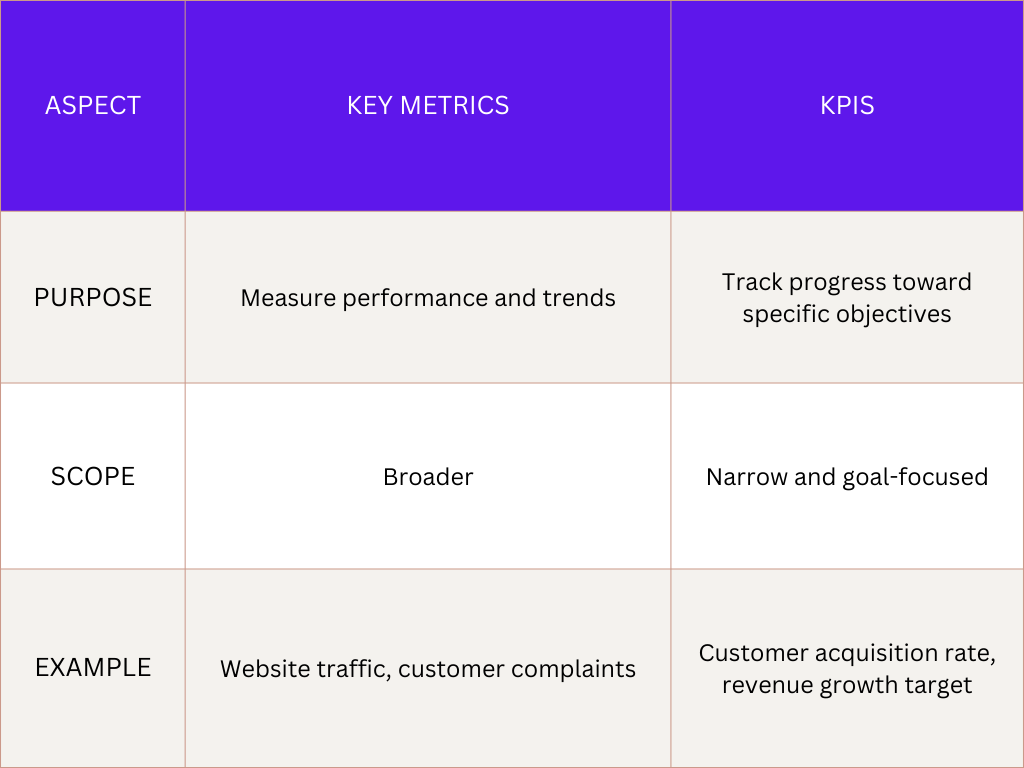
In practical terms, Key Metrics often overlap with Key Performance Indicators (KPIs), but there’s a subtle difference. KPIs are specific goals tied to strategic objectives, while Key Metrics include any essential measure that helps assess performance.
Why Key Metrics Matter
Focus: They prevent teams from getting lost in irrelevant data.
Alignment: Ensure all departments work toward the same objectives.
Insight: Provide actionable information to guide decisions.
Accountability: Help track performance and outcomes consistently.
By monitoring the right Key Metrics, organizations can transition from reactive problem-solving to proactive, data-driven decision making.
How Key Metrics Support Business Success
Measuring the right Key Metrics allows businesses to evaluate effectiveness and optimize strategies in real time. This approach turns raw data into insights that inform everything from marketing campaigns to operational processes.
Some ways Key Metrics drive business success include:
Tracking growth trends: Revenue, customer acquisition, and retention rates.
Identifying bottlenecks: Operational or process inefficiencies.
Enhancing customer satisfaction: Service quality and response times.
Measuring ROI: Understanding the impact of campaigns and initiatives.
Companies that actively monitor Key Metrics are better positioned to make decisions that deliver long-term results. Research from McKinsey highlights that organizations leveraging data effectively outperform peers by 5-6% in productivity and profitability.
Choosing the Right Key Metrics
Not every metric is meaningful. Selecting the right Key Metrics is essential to ensure focus and effectiveness. Here’s a structured approach:
Step 1: Align Metrics With Business Objectives
Start by defining strategic goals. For instance, if a company wants to increase customer loyalty, relevant Key Metrics could include repeat purchase rate, net promoter score, or churn rate.
Step 2: Prioritize Actionable Metrics
Focus on measures that inform decisions and trigger action. Vanity metrics like total website hits may look impressive but don’t indicate progress.
Step 3: Ensure Measurability
A Key Metric must be quantifiable, consistent, and easy to track over time. Clear definitions prevent confusion across teams.
Step 4: Set Realistic Targets
Define thresholds, benchmarks, or goals for each metric to assess performance accurately. This step transforms data into a Key Performance Indicator (KPI) framework.
Step 5: Review and Adjust Regularly
Business environments evolve, so periodically reassess your Key Metrics to maintain relevance. Teams should refine and adapt metrics based on operational and strategic insights.
Key Performance Indicators vs Key Metrics
While often used interchangeably, Key Metrics and KPIs serve slightly different purposes: