Ethical Considerations for AI-Driven Decision Support Systems

Table of Contents


Artificial intelligence is rapidly transforming how organizations analyze data, forecast outcomes, and make informed choices. From finance and healthcare to manufacturing and marketing, AI-Driven Decision Support Systems are becoming essential tools for improving efficiency, accuracy, and strategic clarity. However, as these systems gain influence over critical decisions, ethical considerations are no longer optional—they are fundamental.

Ethical AI is not just about compliance or reputation management. It directly affects trust, fairness, transparency, and long-term business sustainability. Organizations that deploy intelligent decision-support technologies must understand the ethical implications tied to data usage, algorithm design, accountability, and governance. Without a responsible framework, even the most advanced AI system can cause unintended harm.

This article explores the key ethical considerations surrounding AI-Driven Decision Support Systems, focusing on fairness, transparency, privacy, and governance. It also outlines practical steps businesses can take to build ethically sound AI solutions while maintaining innovation and competitive advantage.

Understanding AI-Driven Decision Support Systems

AI-Driven Decision Support Systems are software platforms that use machine learning, predictive analytics, and data modeling to assist humans in making informed decisions. Unlike traditional rule-based systems, these tools learn from historical data, adapt to patterns, and provide recommendations rather than fixed outcomes.

Common use cases include:

  • Financial risk assessment

  • Demand forecasting

  • Medical diagnosis support

  • Fraud detection

  • Supply chain optimization

While these systems enhance decision quality, they also introduce ethical challenges that stem from data dependency, automation, and limited human oversight.

Why Ethics Matter in AI-Based Decision Making

Ethical concerns in AI are not hypothetical. Real-world cases have shown how biased algorithms, opaque models, and weak governance can negatively impact individuals and organizations. When AI-Driven Decision Support Systems influence hiring decisions, credit approvals, or healthcare recommendations, ethical failures can lead to discrimination, loss of trust, and legal consequences.

Ethics matter because they:

  • Protect individuals from unfair treatment

  • Preserve organizational credibility

  • Ensure regulatory compliance

  • Promote long-term AI sustainability

Incorporating AI ethics into decision-support frameworks helps organizations align technology with human values rather than replacing judgment with unchecked automation.

Algorithmic Bias: A Core Ethical Challenge

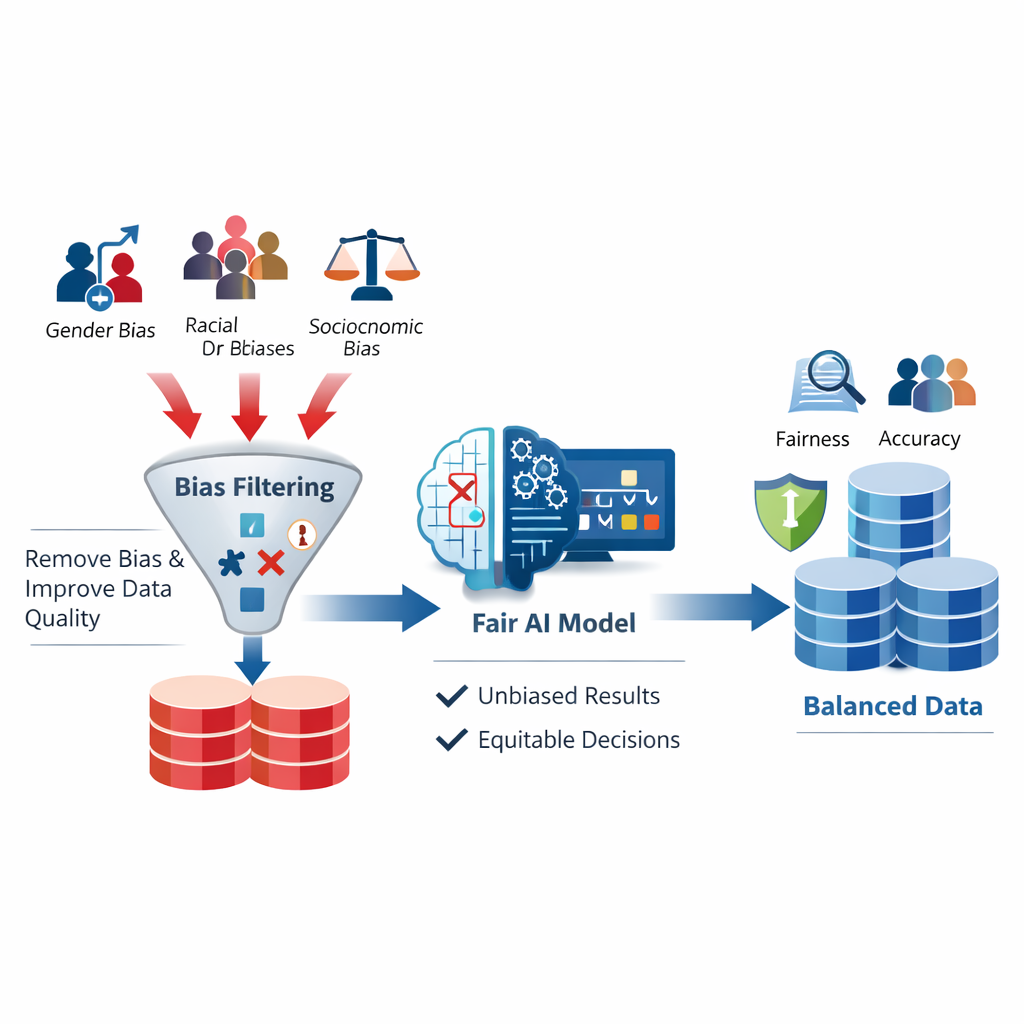
One of the most discussed issues in AI-Driven Decision Support Systems is algorithmic bias. Bias occurs when AI models produce systematically unfair outcomes due to skewed data, flawed assumptions, or incomplete representation.

Causes of Algorithmic Bias

Bias can enter decision-support systems through:

  • Historical data reflecting social inequalities

  • Limited or unbalanced datasets

  • Proxy variables that indirectly encode sensitive traits

  • Poor model validation practices

Even well-intentioned AI initiatives can unintentionally reinforce existing disparities if bias is not actively addressed.

AI-Driven Decision Support Systems


Consequences of Unchecked Bias

Unchecked algorithmic bias can lead to:

  • Discriminatory decision outcomes

  • Regulatory violations

  • Erosion of user trust

  • Reputational damage

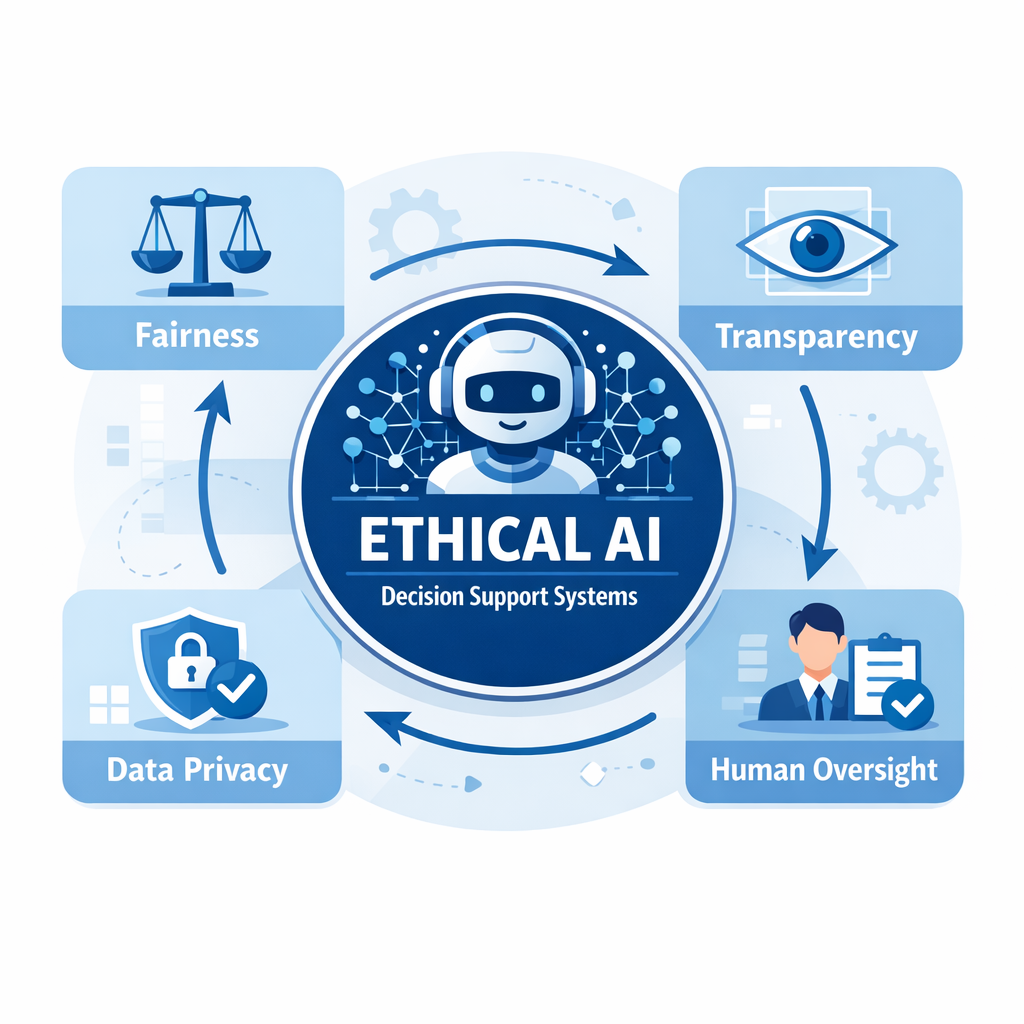
Ethical deployment requires continuous auditing, bias testing, and human oversight to ensure fairness in AI-assisted decisions.

Data Privacy in AI: Protecting Sensitive Information

Another critical concern is data privacy in AI. AI-Driven Decision Support Systems rely heavily on large volumes of data, often including personal, financial, or behavioral information.

Privacy Risks in Decision Support Systems

Key privacy risks include:

  • Unauthorized data access

  • Excessive data collection

  • Inadequate anonymization

  • Weak data governance controls

Organizations must ensure that data used for AI-driven decisions complies with privacy regulations and ethical standards.

Best Practices for Ethical Data Use

To strengthen data privacy:

  • Collect only necessary data

  • Implement strong encryption and access controls

  • Use anonymization and data minimization techniques

  • Maintain clear data retention policies

Ethical AI begins with respecting user consent and safeguarding sensitive information throughout the AI lifecycle.

For deeper insights into responsible data handling, the OECD AI Principles provide a widely accepted ethical framework.

AI Transparency and Explainability

AI transparency is essential when decision-support systems influence high-stakes outcomes. Users and stakeholders must understand how AI-generated recommendations are produced.

Why Transparency Matters

Transparent AI-Driven Decision Support Systems:

  • Improve user trust

  • Enable accountability

  • Support regulatory compliance

  • Facilitate error detection

Black-box models that cannot explain their reasoning create ethical and operational risks, especially in regulated industries.

Practical Approaches to Transparency

Organizations can improve transparency by:

  • Using explainable AI models where possible

  • Providing decision rationales in plain language

  • Documenting model assumptions and limitations

  • Allowing human review of AI recommendations

Transparency does not require revealing proprietary algorithms, but it does demand clarity about how decisions are influenced.

Responsible AI Governance Frameworks

Ethical AI implementation requires more than technical fixes—it demands responsible AI governance. Governance frameworks define how AI systems are designed, deployed, monitored, and improved.

Key Elements of Responsible AI Governance

A strong governance framework includes:

  • Clear accountability structures

  • Ethical guidelines and policies

  • Regular risk assessments

  • Ongoing monitoring and audits

  • Cross-functional oversight teams

Governance ensures that AI-Driven Decision Support Systems remain aligned with organizational values and societal expectations over time.

AI-Driven Decision Support Systems


Aligning Governance With Business Strategy

Ethical AI governance should not slow innovation. Instead, it should enable responsible scaling by embedding ethics into strategic planning, procurement, and system design.

The World Economic Forum’s AI Governance resources offer practical guidance for organizations.

Human Oversight and Decision Accountability

Despite their sophistication, AI-Driven Decision Support Systems should support—not replace—human judgment. Ethical decision-making requires human accountability at every stage.

The Role of Human-in-the-Loop Systems

Human oversight ensures that:

  • AI recommendations are contextualized

  • Ethical concerns are identified early

  • Exceptions are handled responsibly

  • Accountability remains clear

By maintaining human-in-the-loop processes, organizations reduce the risk of over-automation and ethical blind spots.

Balancing Innovation With Ethical Responsibility

Innovation and ethics are not opposing forces. Ethical design strengthens the long-term value of AI-Driven Decision Support Systems by making them more reliable, trustworthy, and socially acceptable.

Organizations that prioritize ethics gain:

  • Higher stakeholder confidence

  • Better adoption rates

  • Reduced legal exposure

  • Sustainable competitive advantage

Ethics should be viewed as a strategic investment, not a constraint.

Practical Steps for Ethical AI Implementation

To deploy ethical AI-Driven Decision Support Systems, organizations should:

  1. Conduct ethical risk assessments early

  2. Audit data sources for bias and quality

  3. Build transparency into system design

  4. Establish responsible AI governance structures

  5. Train teams on AI ethics and accountability

These steps help embed ethical thinking throughout the AI lifecycle.

Learn how advanced analytics solutions can support responsible AI practices by exploring our services.

Conclusion: Building Trust Through Ethical AI

As organizations increasingly rely on AI-Driven Decision Support Systems, ethical considerations must remain central to design and deployment. Addressing AI ethics, algorithmic bias, data privacy in AI, AI transparency, and responsible AI governance is essential for building trust and ensuring long-term success.

Ethical AI is not a one-time effort—it is an ongoing commitment that evolves with technology, regulation, and societal expectations. By embedding ethics into decision-support systems today, organizations prepare themselves for a more responsible, resilient, and data-driven future.

If your organization is exploring intelligent analytics solutions, now is the time to adopt an ethical-first approach. Visit the Engine Analytics to learn more about how data-driven insights can support responsible innovation.

For personalized guidance, feel free to contact and start building ethical AI solutions with confidence.

Here’s Some Interesting FAQs for You

Ethical AI-Driven Decision Support Systems are built with a strong focus on fairness, accountability, transparency, and human oversight. These systems are designed to assist decision-makers, not replace them entirely. Ethical systems ensure that outcomes are not discriminatory, that decisions can be explained in understandable terms, and that humans remain responsible for final judgments. They also follow clear governance policies, comply with regulations, and respect user rights, making AI a trustworthy partner rather than an unchecked authority.

Organizations can reduce algorithmic bias by addressing it at every stage of the AI lifecycle. This includes using diverse and representative datasets, validating data sources for hidden patterns, and testing models across different demographic groups. Regular audits help detect unintended bias over time, while involving multidisciplinary teams—such as data scientists, domain experts, and ethicists—adds broader perspectives. Continuous monitoring ensures that the system adapts responsibly as new data and conditions emerge.

AI transparency is essential because it allows users to understand how and why decisions or recommendations are made. In decision support environments—especially those involving finance, healthcare, or compliance—stakeholders need clear explanations to trust AI outcomes. Transparency enables accountability, simplifies regulatory reviews, and helps identify errors or bias early. When users can interpret AI-driven insights, they are more likely to adopt and rely on the system responsibly, leading to better and more informed decision-making.