Edge Computing in 2026: Bringing Analytics Closer to the Source

Table of Contents


Data is no longer created in a single place. It flows from sensors, devices, applications, machines, and users—constantly and everywhere. As organizations push for faster insights and smarter automation, traditional centralized analytics models are showing their limits. This is where Edge Computing in 2026 becomes a defining shift.

Rather than sending all raw data to centralized clouds or warehouses, edge computing moves intelligence closer to where data is generated. The result is faster decisions, lower costs, improved reliability, and entirely new use cases that were previously impossible.

In this article, we explore how Edge Computing in 2026 is reshaping analytics, why edge analytics is becoming essential, and how businesses can architect scalable, future-proof systems that balance edge and cloud intelligence.

What Is Edge Computing—and Why 2026 Is the Tipping Point

Edge computing refers to processing data at or near the source of generation instead of relying solely on centralized infrastructure. This could mean:

  • On-device processing (sensors, cameras, machines)

  • On-premise gateways

  • Local edge servers

  • Micro data centers close to operations

What makes Edge Computing in 2026 different from earlier iterations is maturity. Hardware is cheaper and more powerful, software orchestration is standardized, and businesses now demand real-time data processing as a baseline, not a luxury.

Key drivers accelerating adoption include:

  • Explosion of connected devices

  • Rising cloud egress and latency costs

  • Operational need for instant decision-making

  • Increased regulatory and data-sovereignty pressures

By 2026, edge computing is no longer experimental—it is a core part of modern data strategy.

Why Centralized Analytics Alone No Longer Works

Traditional analytics pipelines were designed for batch processing and historical analysis. While still valuable, they struggle in environments that require immediate action.

Common limitations include:

  • Latency caused by transmitting large data volumes

  • Bandwidth constraints and rising costs

  • Fragility when connectivity is unstable

  • Delayed insights that arrive too late to matter

Edge Computing in 2026 directly addresses these constraints by enabling low-latency analytics where milliseconds matter.

For industries like manufacturing, energy, logistics, healthcare, and retail, this shift is not optional—it is operationally critical.

Edge Analytics: Turning Data Into Decisions Instantly

At the heart of this transformation is edge analytics. Instead of forwarding raw data upstream, analytics models run directly at the edge, filtering, aggregating, and acting on data locally.

This enables:

  • Immediate anomaly detection

  • Real-time alerts and automated responses

  • Reduced data volumes sent to the cloud

  • Higher data quality for centralized reporting

In Edge Computing in 2026, analytics becomes layered:

  1. Edge layer for instant decisions

  2. Regional layer for near-real-time coordination

  3. Central cloud layer for strategic analysis and AI training

This layered approach is fundamental to modern distributed computing architecture.
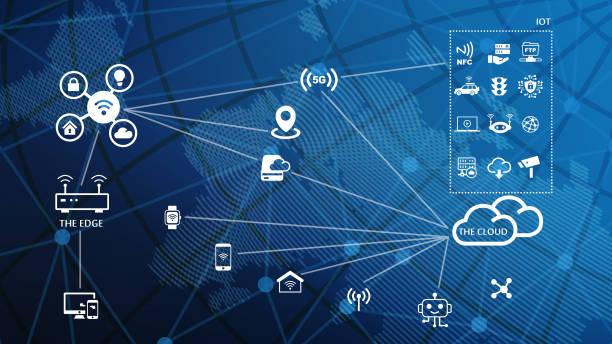
Edge Computing in 2026

Real-Time Data Processing as a Competitive Advantage

Speed is no longer just about performance—it is about survival. Businesses that act first win market share, reduce downtime, and optimize costs.

Real-time data processing at the edge enables:

  • Predictive maintenance before failures occur

  • Dynamic pricing and personalization

  • Automated safety responses

  • Smart energy load balancing

  • Fraud detection at the point of transaction

In Edge Computing in 2026, real-time insights are embedded directly into operations, not delayed by reporting cycles.

This shift is especially powerful when combined with automated workflows and AI inference models running locally.

IoT Edge Computing: From Data Collection to Intelligence

The Internet of Things is the primary catalyst behind edge adoption. Billions of connected devices generate continuous streams of data that are impractical to centralize.

IoT edge computing solves this by enabling devices and gateways to:

  • Pre-process sensor data

  • Detect patterns locally

  • Trigger actions without cloud dependency

  • Synchronize selectively with central systems

Use cases include:

  • Smart factories optimizing production in real time

  • Retail stores adjusting inventory automatically

  • Smart cities managing traffic and utilities dynamically

  • Healthcare devices monitoring patients continuously

By 2026, Edge Computing in 2026 and IoT are inseparable. One cannot scale without the other.

The Role of Distributed Computing Architecture

Modern edge systems are not standalone. They are part of a broader distributed computing architecture that balances workloads intelligently across environments.

Key characteristics include:

  • Decentralized processing nodes

  • Event-driven data flows

  • Policy-based data routing

  • Unified observability across edge and cloud

This architecture ensures resilience. If one node fails, others continue operating. If connectivity drops, edge systems remain functional.

In Edge Computing in 2026, resilience is a design requirement, not an afterthought.

Low-Latency Analytics and Mission-Critical Systems

Latency is more than inconvenience—it can be costly or dangerous. In many environments, delays of even a few seconds are unacceptable.

Low-latency analytics enables:

  • Autonomous vehicle decision-making

  • Industrial safety shutdowns

  • Financial transaction validation

  • Real-time video analytics

  • Network threat detection

By keeping analytics close to the source, Edge Computing in 2026 minimizes dependency on distant infrastructure and unpredictable networks.

This is particularly valuable in remote or bandwidth-constrained locations.

How Edge and Cloud Analytics Work Together

Edge computing does not replace the cloud—it complements it.

A modern analytics stack includes:

  • Edge for immediacy and control

  • Cloud for scale, historical context, and AI training

  • Unified pipelines connecting both seamlessly

At ENGINE Analytics, this hybrid approach is central to how we design analytics systems. Our focus is not on tools, but on building architectures that deliver measurable ROI through automation and reliability. Learn more about our approach on our data analytics services page.

In Edge Computing in 2026, success depends on orchestration, not isolation.

Edge Computing in 2026

Security and Governance at the Edge

Decentralization introduces new challenges. Each edge node becomes a potential attack surface.

Key considerations include:

  • Device authentication and identity management

  • Encrypted data processing and storage

  • Secure model deployment and updates

  • Centralized policy enforcement

Edge systems must be designed with zero-trust principles from day one.

When implemented correctly, Edge Computing in 2026 can actually improve security by limiting data exposure and reducing centralized attack vectors.

Industry Adoption: Where Edge Delivers Immediate Value

Edge computing is not theoretical—it is already delivering results.

High-impact industries include:

  • Manufacturing: predictive maintenance, quality inspection

  • Energy: grid optimization, outage detection

  • Retail: demand forecasting, in-store analytics

  • Logistics: route optimization, cold-chain monitoring

  • Healthcare: patient monitoring, diagnostics at the bedside

As adoption accelerates, Edge Computing in 2026 becomes a baseline capability rather than a differentiator.

Building an Edge-Ready Analytics Strategy

Organizations planning for the future should focus on outcomes, not buzzwords.

A practical roadmap includes:

  1. Identifying latency-sensitive use cases

  2. Designing modular, scalable architectures

  3. Selecting edge-capable analytics platforms

  4. Ensuring observability and governance

  5. Integrating edge insights with central analytics

If your organization is evaluating this transition, speaking with a specialist early can prevent costly redesigns later. You can reach out directly through our contact page to discuss edge-ready architectures tailored to your needs.

External Perspectives on Edge Computing

Industry analysts agree that edge is now a strategic priority. According to Gartner, edge computing is a foundational technology for digital business and operational resilience. Cloud providers like AWS are also investing heavily in edge services to support real-time workloads closer to customers.

These signals reinforce what businesses are already experiencing firsthand: Edge Computing in 2026 is no longer optional.

The Future Outlook: What Comes After 2026

Looking ahead, edge systems will become:

  • More autonomous through embedded AI

  • Easier to manage with standardized orchestration

  • More energy-efficient and sustainable

  • Tightly integrated with enterprise data platforms

As models become lighter and hardware more capable, edge intelligence will move even closer to devices themselves.

The organizations that invest now will define the next decade of analytics.

Conclusion: Edge Computing Is Now a Strategic Imperative

Edge Computing in 2026 represents a fundamental evolution in how analytics systems are designed. By bringing intelligence closer to the source, organizations unlock faster decisions, greater resilience, and new operational capabilities.

The future belongs to businesses that treat edge as part of a unified analytics strategy—not a disconnected add-on.

If you are ready to modernize your analytics architecture and build systems designed for real-time impact, explore how ENGINE Analytics can help.

Here’s Some Interesting FAQs for You

Edge Computing in 2026 is fundamentally more mature than earlier edge models. Advances in edge hardware now allow complex analytics and AI inference to run reliably outside centralized data centers. Standardized orchestration frameworks make it easier to deploy, monitor, and update edge workloads at scale, while enterprise-grade analytics platforms ensure security, governance, and observability. Together, these improvements make edge systems scalable, resilient, and ready for mission-critical operations rather than experimental use cases.

No. While IoT edge computing is a major driver, edge analytics extends far beyond connected devices. Retailers use it for real-time inventory and in-store behavior analysis, financial institutions rely on it for fraud detection and transaction monitoring, healthcare providers apply it for patient monitoring and diagnostics, and logistics companies use it for route optimization and asset tracking. Any environment that depends on low-latency analytics can benefit from edge-based intelligence.

Edge computing lowers analytics costs by processing and filtering data close to where it is generated, reducing the volume of raw data sent to the cloud. This minimizes bandwidth usage, cloud storage requirements, and unnecessary compute expenses. By improving data quality before transmission, Edge Computing in 2026 also reduces downstream processing overhead, enabling more efficient and cost-effective analytics at scale.