
Singapore has emerged as one of Southeast Asia’s most competitive digital commerce markets. With high internet penetration, tech-savvy consumers, and strong logistics infrastructure, brands are under constant pressure to optimize performance. In this environment, eCommerce Data Analytics in Singapore is no longer optional—it is a strategic necessity.
Modern businesses are not just collecting data; they are leveraging it to unlock growth, improve customer experience, and increase profitability. From tracking user journeys to predicting buying behavior, analytics is shaping how brands compete. Companies that adopt a data-driven eCommerce strategy outperform those relying on assumptions.
This article explores how businesses are using eCommerce Data Analytics in Singapore to turn raw data into measurable revenue. It breaks down key strategies, tools, and actionable insights that can help brands stay ahead in an increasingly data-centric landscape.
Singapore’s eCommerce ecosystem is highly dynamic. Consumers expect personalization, speed, and seamless experiences across devices. This makes data critical.
eCommerce Data Analytics in Singapore enables businesses to:
Without analytics, brands risk making decisions based on incomplete or outdated information.
For businesses looking to implement advanced analytics solutions, exploring tailored offerings through the data analytics services page can be a practical starting point.
To fully utilize eCommerce Data Analytics in Singapore, brands must understand its core components.
This focuses on how users interact with your platform. It includes:
With strong customer behavior analytics, brands can identify friction points and improve user experience.
This includes tracking:
These metrics directly influence eCommerce conversion optimization strategies.
Understanding which channels drive results is critical. Businesses analyze:
This supports a more efficient data-driven eCommerce strategy.
Using retail data insights Singapore, brands can:
To fully utilize eCommerce Data Analytics in Singapore, brands must go beyond basic metrics and understand how each analytics component contributes to business growth. Each area plays a distinct role, but together they form a unified system that drives smarter decisions and higher revenue.
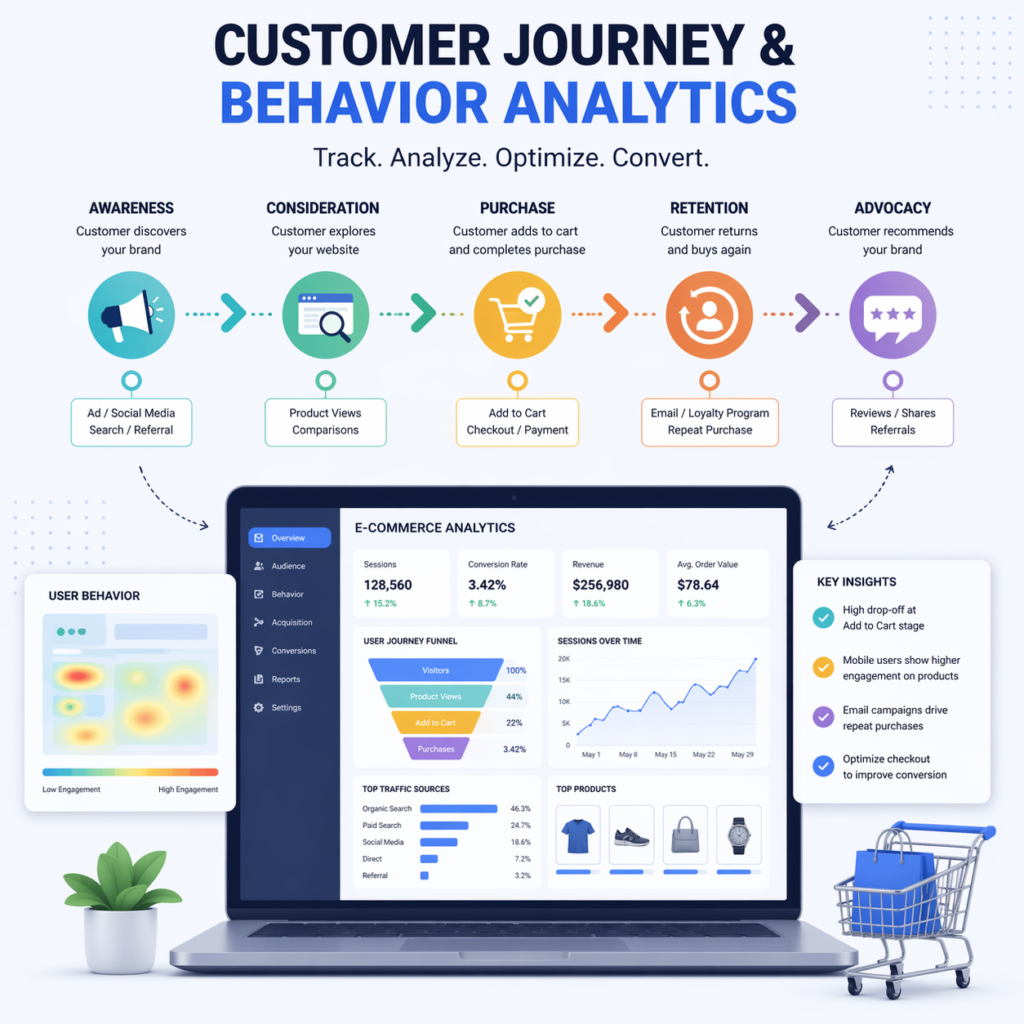
Customer behavior analytics is the foundation of any successful analytics strategy. It focuses on how users interact with your website or app at every stage of the journey.
It includes:
However, advanced customer behavior analytics goes much deeper than surface-level tracking.
For example, if analytics shows high traffic on product pages but low add-to-cart rates, it may indicate issues with pricing, product descriptions, or trust signals.
With strong customer behavior insights, businesses can:
This is a critical pillar of eCommerce conversion optimization, especially in a competitive market like Singapore where user expectations are high.
Sales and revenue analytics directly connect data to business performance. This component answers the most important question: What is driving revenue, and how can it be increased?
It includes tracking:
Advanced eCommerce Data Analytics in Singapore focuses on:
For instance, if AOV is low, businesses can introduce:
Sales analytics enables brands to:
This is where data directly fuels eCommerce conversion optimization and revenue scaling.
Marketing performance analytics ensures that every rupee (or dollar) spent delivers measurable returns. In Singapore’s competitive digital landscape, inefficient marketing can quickly erode margins.
Businesses analyze:
For example, a campaign may generate high traffic but low conversions. Analytics helps identify whether the issue lies in:
With strong marketing analytics, businesses can:
This strengthens a data-driven eCommerce strategy, where every marketing decision is backed by measurable insights.
Inventory and supply chain analytics are often overlooked, but they are crucial for operational efficiency and profitability.
Using retail data insights Singapore, brands can:
For example, during festive seasons or major sales events in Singapore, predictive analytics for eCommerce helps businesses stock the right products in the right quantities.
Effective supply chain analytics helps brands:
This not only improves operational efficiency but also enhances customer satisfaction—an essential factor in long-term retention.
While each component delivers value individually, the real power of eCommerce Data Analytics in Singapore comes from integration.
When customer behavior, sales, marketing, and inventory analytics work together, businesses can:
In a fast-moving market like Singapore, this integrated approach is what separates average brands from high-performing, data-led businesses.
Leading companies are using eCommerce Data Analytics in Singapore in sophisticated ways to boost profitability.
Consumers expect tailored experiences. Analytics enables:
According to research from McKinsey & Company, personalization can increase revenue by up to 15%. This highlights the importance of combining customer behavior analytics with actionable insights.
Understanding where customers drop off is key to improving conversions.
Brands analyze:
By addressing these issues, businesses achieve better eCommerce conversion optimization.
With predictive analytics for eCommerce, brands can forecast:
This allows proactive decision-making rather than reactive adjustments.
Several tools are widely used in eCommerce Data Analytics in Singapore:
These tools help convert raw data into actionable retail data insights Singapore.
For implementation guidance or custom analytics frameworks, brands often reach out through the contact page for expert consultation.
A successful data-driven eCommerce strategy requires structured planning.
Start by identifying goals:
Integrate data from:
This ensures consistency in eCommerce Data Analytics in Singapore.
Avoid vanity metrics. Prioritize:
Use A/B testing to refine:
This directly enhances eCommerce conversion optimization.
Despite its benefits, implementing eCommerce Data Analytics in Singapore comes with challenges.
Data often exists in silos, making integration difficult.
Advanced analytics requires expertise in:
Singapore enforces strict data protection laws. Businesses must ensure compliance with regulations like the Personal Data Protection Act (PDPC guidelines).
Handling large volumes of data in real time requires robust infrastructure.
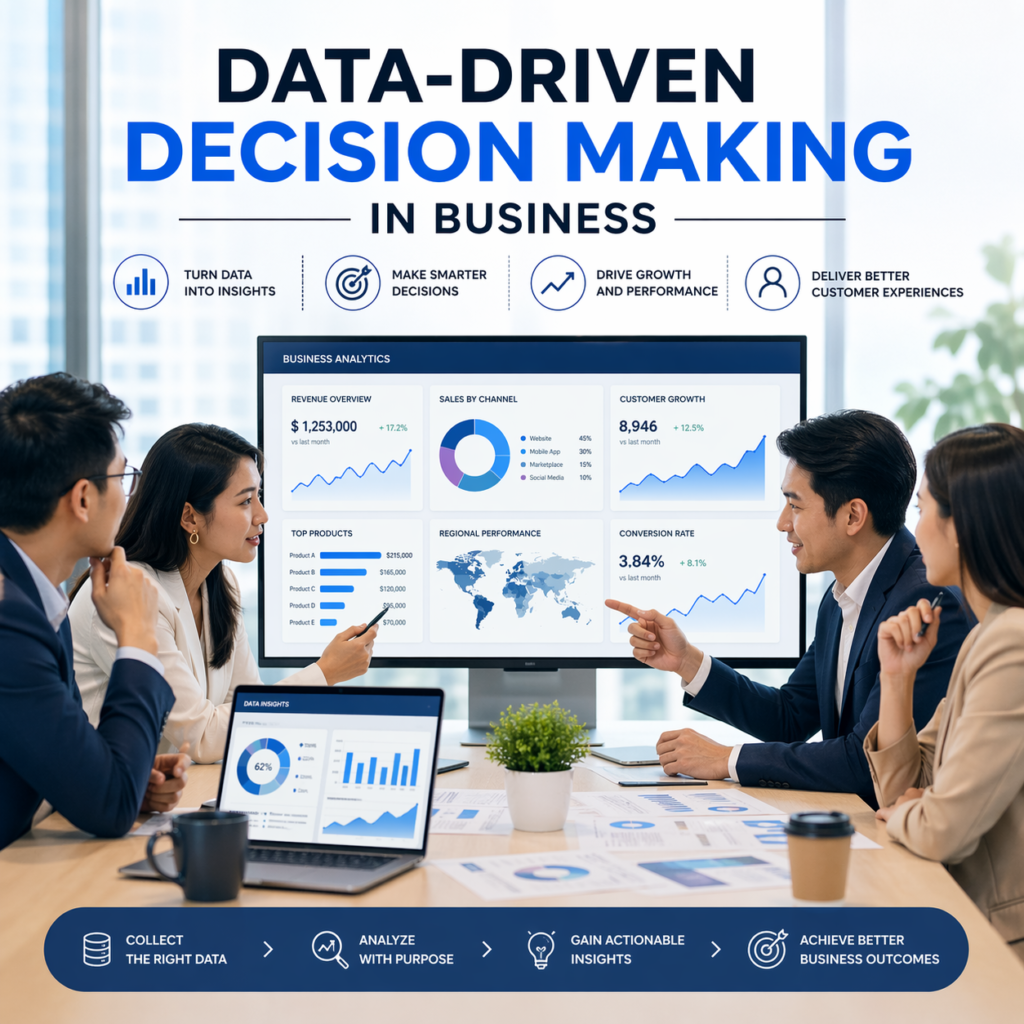
Artificial intelligence is transforming eCommerce Data Analytics in Singapore.
These technologies enhance both efficiency and accuracy in analytics.
Data alone does not generate revenue—execution does.
Brands leveraging eCommerce Data Analytics in Singapore effectively see measurable ROI improvements.
Smart brands adopt a case-driven approach rather than generic analytics.
This practical application of retail data insights Singapore ensures continuous growth.
The future of eCommerce Data Analytics in Singapore will be shaped by innovation.
According to Statista, Southeast Asia’s eCommerce market continues to grow rapidly, reinforcing the importance of advanced analytics strategies.
Implementing eCommerce Data Analytics in Singapore requires technical expertise and strategic thinking.
Professional analytics partners provide:
To explore tailored solutions, businesses can visit the Engine Analytics homepage for more insights.
In today’s competitive landscape, eCommerce Data Analytics in Singapore is the foundation of sustainable growth. Brands that harness data effectively can deliver personalized experiences, optimize operations, and maximize revenue.
From customer behavior analytics to predictive analytics for eCommerce, every data point contributes to smarter decision-making. The key lies in transforming insights into action through a structured and strategic approach.
If your business is ready to unlock the full potential of analytics, now is the time to act. Explore expert solutions and start building a smarter, data-driven future with Engine Analytics.
eCommerce data analytics involves collecting, processing, and analyzing data from online stores to improve overall business performance. This includes data from website traffic, customer interactions, sales transactions, and marketing campaigns. By using these insights, businesses can understand customer behavior, identify trends, and make informed decisions that drive revenue growth and operational efficiency.
Analytics improves eCommerce conversions by identifying bottlenecks and friction points in the customer journey. For example, it can reveal where users drop off—such as product pages or checkout steps—and highlight issues like slow loading times, poor design, or unclear messaging. With these insights, businesses can optimize user experience, refine layouts, and run A/B tests, ultimately leading to higher conversion rates and better customer satisfaction.
Predictive analytics for eCommerce uses historical data and advanced algorithms to forecast future customer behavior, demand patterns, and sales trends. This allows businesses to anticipate what customers are likely to buy, when demand will increase, and which users may churn. As a result, companies can take proactive actions—such as personalized marketing, better inventory planning, and targeted retention strategies—to maximize profitability and stay ahead of competitors.
