Data Observability Practices That Prevent Analytics Failures

Table of Contents


Introduction

Modern organizations depend on analytics to guide decisions, optimize operations, and uncover growth opportunities. Yet despite massive investments in data platforms, many analytics initiatives fail quietly. Dashboards show the wrong numbers, reports arrive late, and stakeholders lose confidence. These failures are rarely caused by lack of data. Instead, they stem from invisible breakdowns across complex pipelines. This is where Data Observability Practices become essential. Rather than reacting to broken dashboards after the damage is done, observability helps teams detect issues early, understand root causes, and maintain trust in analytics outputs. As data ecosystems grow more distributed and automated, observability is no longer optional. It is a foundational capability for teams that want consistent, reliable insights and long-term analytics success.

Why Analytics Fail in Growing Data Environments

Analytics failures often begin long before anyone notices a broken report. Data flows through ingestion tools, transformation layers, warehouses, and visualization platforms. Each handoff introduces risk. Without systematic oversight, small issues compound into major failures.

Common causes include schema changes that go unnoticed, upstream data delays, silent data quality degradation, and transformation logic that no longer matches business rules. Manual checks cannot scale with modern data volumes. This is why Analytics failure prevention requires continuous visibility, not periodic audits.

Another challenge is organizational. Data teams are under pressure to deliver fast, leaving little time for proactive monitoring. When failures occur, engineers scramble to fix symptoms instead of addressing root causes. Over time, analytics reliability erodes, and stakeholders revert to gut-based decision-making. Effective Data Observability Practices shift teams from firefighting to prevention by embedding monitoring, alerting, and accountability directly into data workflows.

What Data Observability Really Means

Data observability applies proven monitoring concepts from software engineering to analytics systems. It focuses on understanding the health of data by tracking signals across the entire lifecycle. At its core, observability answers four questions: Is the data fresh? Is it complete? Is it accurate? Can issues be traced to their source?

Unlike traditional data quality checks, observability is continuous and automated. It does not rely on static rules alone. Instead, it detects anomalies, trends, and unexpected behavior. This makes Data Observability Practices especially valuable in dynamic environments where schemas, sources, and business logic evolve frequently.

Strong observability also supports accountability. When issues arise, teams can trace lineage, identify responsible systems, and resolve problems faster. This clarity is essential for maintaining analytics reliability at scale and for supporting advanced use cases like machine learning and real-time reporting.

Core Data Observability Practices That Prevent Failures

Effective observability is not a single tool or dashboard. It is a discipline built on several complementary practices that work together.

Data Pipeline Monitoring Across the Stack

Modern analytics depends on complex pipelines. Data pipeline monitoring ensures each stage performs as expected, from ingestion to transformation to consumption. Monitoring should cover execution times, failure rates, and unexpected volume changes.

Key monitoring signals include:

  • Delays compared to historical baselines

  • Missing or duplicated records

  • Sudden drops or spikes in row counts

  • Failed or skipped transformations

By tracking these indicators continuously, teams can identify issues before downstream dashboards break. This proactive visibility is central to Data Observability Practices that scale.

Data Observability Practices


Proactive Data Quality Management

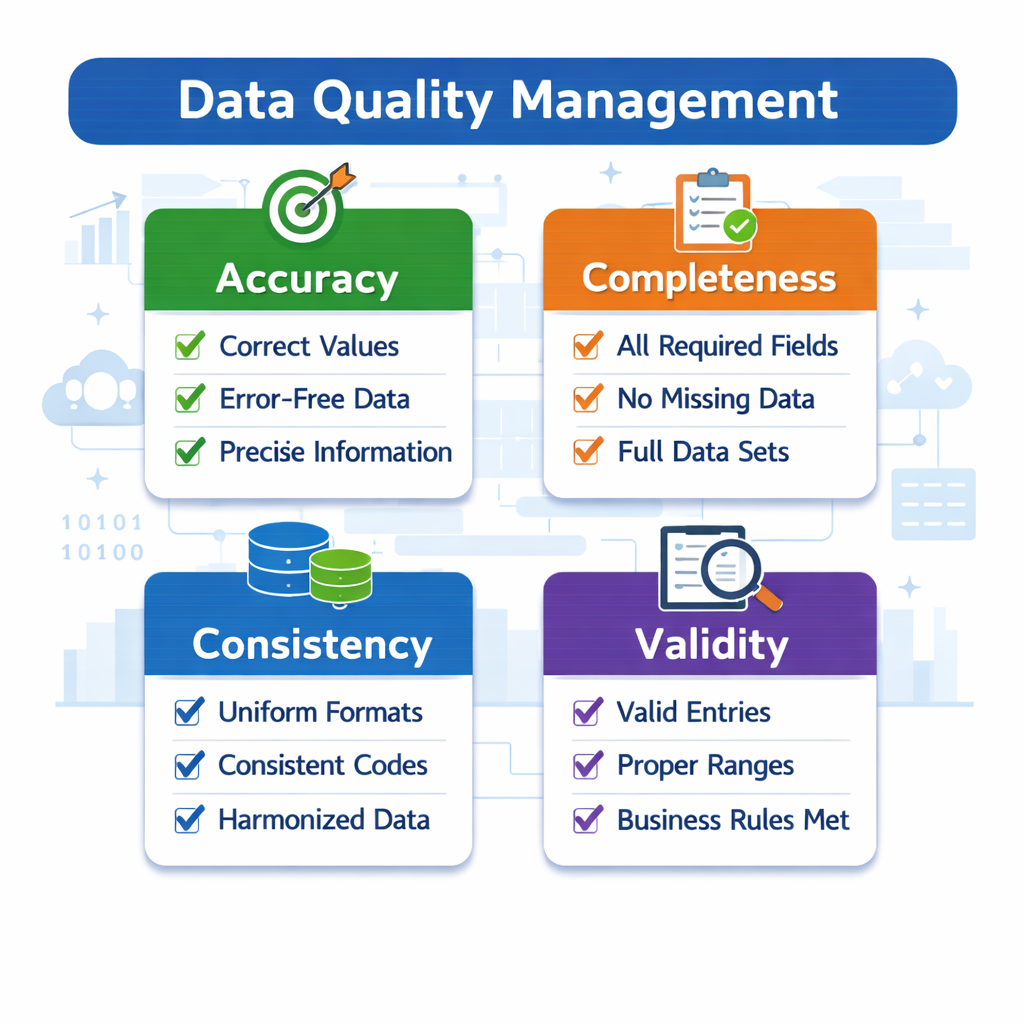
Quality issues rarely appear overnight. They degrade gradually as sources change or logic drifts. Strong Data quality management focuses on detecting anomalies rather than enforcing rigid rules that quickly become outdated.

Effective approaches include:

  • Statistical anomaly detection on key metrics

  • Freshness checks based on expected arrival patterns

  • Distribution monitoring for critical fields

These techniques allow teams to catch subtle issues early. When combined with alerting, they support rapid intervention and protect decision-making from corrupted data.

End-to-End Lineage and Impact Analysis

When something breaks, speed matters. End-to-end lineage shows how data moves across systems and which assets depend on it. This visibility reduces mean time to resolution and prevents repeated incidents.

Lineage enables teams to:

  • Trace failures to upstream sources

  • Understand downstream impact before deploying changes

  • Communicate issues clearly to stakeholders

Lineage-driven workflows are a cornerstone of mature Data Observability Practices, especially in organizations with multiple data producers.

Reliability Metrics for Analytics Assets

Analytics should be treated as a product, with measurable reliability standards. Defining service-level expectations for data freshness and accuracy sets clear goals for teams. Monitoring these metrics reinforces analytics reliability and aligns technical work with business outcomes.

Building Observability Into Your Analytics Program

Implementing observability is as much about process as technology. Start by identifying business-critical datasets and dashboards. These assets deserve the highest level of monitoring and protection.

Next, embed observability checks into existing workflows. Alerts should integrate with collaboration tools and incident processes. This ensures issues are addressed quickly and consistently.

Cross-functional ownership is equally important. Data engineers, analytics engineers, and business stakeholders should share responsibility for data health. When observability insights are visible across teams, trust in analytics grows.

Organizations that invest early in Data Observability Practices avoid costly rework and scale analytics with confidence. For teams seeking expert guidance, Engine Analytics offers tailored analytics and observability services that align technology with business goals through its services offerings.

Choosing and Using Data Observability Tools

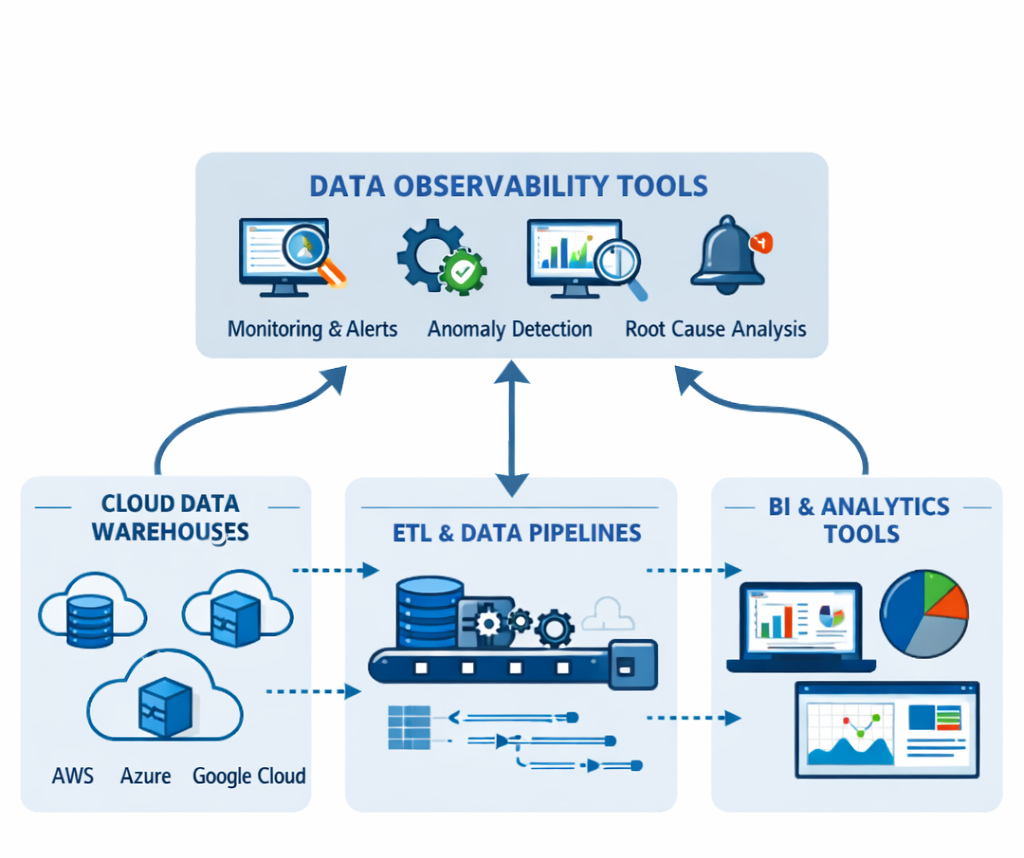
Technology plays a supporting role in observability success. Modern Data observability tools automate monitoring, anomaly detection, and lineage mapping across diverse stacks. However, tools alone are not enough.

When evaluating tools, consider:

  • Compatibility with your existing data stack

  • Ability to scale with data volume and complexity

  • Support for automated alerts and root-cause analysis

Leading industry guidance from sources like Gartner emphasizes aligning tooling with organizational maturity. Similarly, engineering best practices shared by Google Cloud highlight the importance of automation and integration.

Used correctly, observability tools amplify Data Observability Practices by reducing manual effort and improving response times.

Data Observability Practices


Measuring the Impact of Observability

The value of observability should be measurable. Teams often track reduced incident frequency, faster resolution times, and improved stakeholder satisfaction. Over time, these improvements translate into higher confidence in analytics outputs.

Additional benefits include:

  • Fewer emergency fixes and late-night interventions

  • More predictable analytics delivery timelines

  • Stronger alignment between data and business teams

By treating observability as an investment rather than overhead, organizations improve long-term analytics reliability and unlock greater value from their data platforms.

Conclusion: Turning Analytics Into a Trusted Asset

Analytics should empower decisions, not create doubt. As data ecosystems grow more complex, failures become harder to predict and easier to miss. This is why Data Observability Practices are now essential for any organization serious about analytics performance. By combining pipeline monitoring, quality management, lineage, and reliability metrics, teams can prevent failures instead of reacting to them.

If your organization is ready to strengthen analytics reliability and regain trust in data, Engine Analytics can help. Explore proven approaches and expert support on the Engine Analytics homepage or start a conversation through the contact page. With the right observability foundation, analytics becomes a dependable driver of growth—not a recurring risk.

Here’s Some Interesting FAQs for You

Data Observability Practices are structured methods that help teams continuously monitor, understand, and maintain the health of data as it moves through analytics pipelines. These practices go beyond simply checking whether data exists; they focus on whether the data is fresh, complete, accurate, and trustworthy at every stage.

By tracking signals such as data freshness, volume changes, schema evolution, and end-to-end lineage, observability makes hidden issues visible before they reach dashboards or reports. This proactive approach allows teams to identify anomalies early, trace problems back to their root cause, and fix them quickly. Ultimately, Data Observability Practices ensure analytics outputs remain reliable, enabling decision-makers to trust the insights they use every day.

Traditional data quality checks are typically rule-based and static. They rely on predefined thresholds, manual reviews, or periodic audits to confirm whether data meets certain conditions. While useful, these checks often fail to detect unexpected changes, gradual data drift, or issues introduced by upstream system changes.

Data observability takes a more dynamic and continuous approach. Instead of relying solely on fixed rules, it analyzes how data behaves over time, automatically detecting anomalies and unusual patterns. Observability also adds critical context through lineage and pipeline monitoring, showing where data comes from, how it changes, and which downstream assets are affected. This makes observability more scalable, more adaptive, and far better suited for modern, fast-changing data environments.

Data observability should not be owned by a single team or role. It works best as a shared responsibility across the organization. Data engineers are typically responsible for pipeline stability and infrastructure, analytics engineers focus on transformation logic and business definitions, and data consumers or stakeholders validate whether insights align with business expectations.

When ownership is shared, observability insights lead to faster responses and better collaboration. Issues are addressed closer to their source, communication improves between technical and business teams, and accountability becomes clearer. This collective approach ensures that observability is not just a technical safeguard, but a core part of delivering reliable, decision-ready analytics at scale.