Cloud-Native Data Warehousing: Benefits and Best Practices

Table of Contents

Modern businesses generate more data than ever before—from customer interactions and product usage to operational metrics and financial transactions. Yet having data alone is not enough. What matters is how quickly, reliably, and intelligently that data can be transformed into insight. This is where Cloud-Native Data Warehousing has become a cornerstone of modern analytics strategies.

Unlike legacy, on-premise systems, cloud-native platforms are built specifically for scale, flexibility, and real-time decision-making. They allow organizations to store, process, and analyze massive volumes of data without the operational overhead that traditionally slowed analytics teams down.

In this guide, we’ll explore what Cloud-Native Data Warehousing really means, why it matters, and the best practices that help organizations extract maximum value from their data investments.

What Is Cloud-Native Data Warehousing?

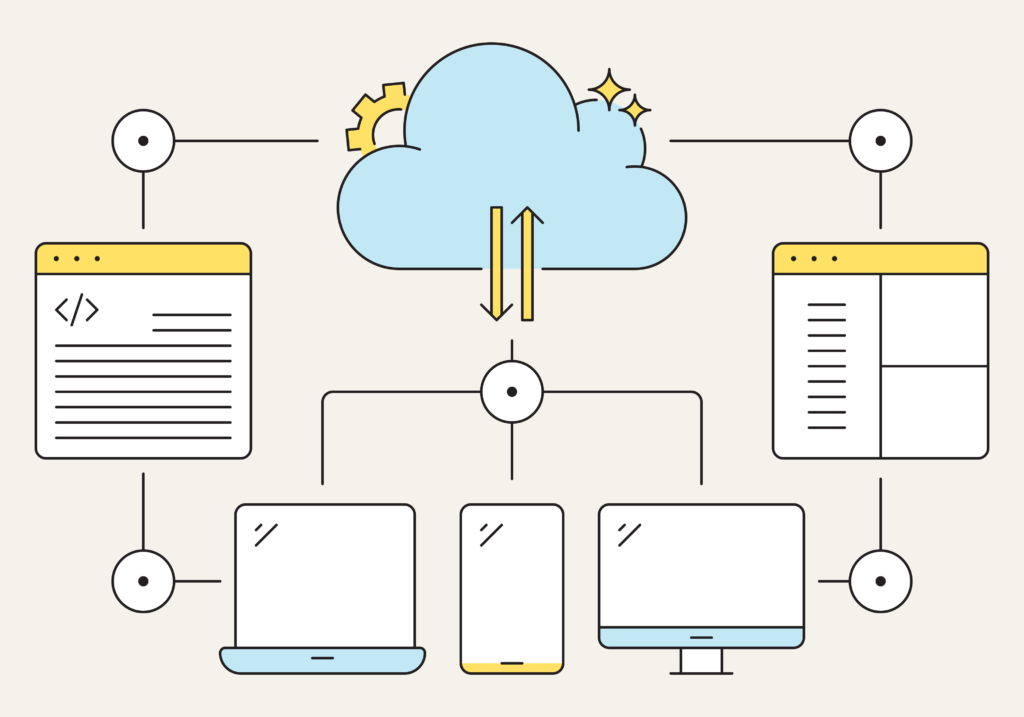
Cloud-Native Data Warehousing refers to data warehouses designed from the ground up to run in cloud environments. Instead of retrofitting legacy systems for the cloud, these platforms take advantage of cloud infrastructure such as elastic compute, object storage, and managed services.

A cloud data warehouse separates storage and compute, allowing organizations to scale each independently. This architectural shift enables faster queries, lower costs, and more predictable performance—even as data volumes grow.

Key characteristics of a cloud-native approach include:

  • Elastic scaling without downtime

  • Usage-based pricing models

  • High availability and built-in redundancy

  • Seamless integration with modern data tools

In practice, Cloud-Native Data Warehousing forms the backbone of a modern data warehouse, supporting analytics, dashboards, machine learning, and AI initiatives across the business.

Why Businesses Are Moving to Cloud-Native Data Warehousing

The shift away from traditional, on-premise systems is not just a technology trend—it’s a business imperative. Organizations need analytics systems that move at the speed of decision-making.

1. Scalability Without Friction

One of the biggest advantages of scalable data warehousing is the ability to handle growth effortlessly. Whether you’re ingesting gigabytes or petabytes of data, cloud-native platforms expand automatically to meet demand.

This eliminates:

  • Capacity planning guesswork

  • Hardware procurement delays

  • Performance bottlenecks during peak usage

As data volumes grow, your analytics capability grows with them.

Cloud-Native Data Warehousing


2. Faster Time to Insight

Cloud-based data warehousing dramatically reduces the time required to move from raw data to actionable insight. Query performance improves because compute resources can scale instantly for complex workloads.

This means:

  • Dashboards refresh faster

  • Analysts spend less time waiting on queries

  • Decision-makers get timely, reliable data

When paired with automation and orchestration, Cloud-Native Data Warehousing supports near real-time analytics across the organization.

3. Lower Total Cost of Ownership

Traditional data warehouses require significant upfront investment in infrastructure and ongoing maintenance. In contrast, cloud data warehouse platforms use a pay-as-you-go model.

Cost benefits include:

  • No capital expenditure on hardware

  • Reduced operational overhead

  • Ability to pause or downscale unused resources

For many organizations, this leads to better cost control and higher ROI from analytics investments.

4. Built for Modern Analytics

A modern data warehouse is not just a storage system—it’s an analytics engine. Cloud-native platforms integrate seamlessly with:

  • BI and visualization tools

  • Data transformation frameworks

  • Machine learning pipelines

  • Reverse ETL and operational analytics tools

This ecosystem compatibility makes cloud-based data warehousing the foundation for advanced analytics strategies.

Cloud-Native vs Traditional Data Warehousing

Understanding the difference between cloud-native and traditional approaches highlights why so many teams are making the switch.

Cloud-Native Data Warehousing

Core Benefits of Cloud-Native Data Warehousing

Elastic Performance on Demand

One of the defining benefits of Cloud-Native Data Warehousing is the ability to scale compute resources independently of storage. This enables:

  • High-performance analytics for complex queries

  • Concurrent workloads without contention

  • Consistent performance during reporting spikes

Teams no longer have to choose between performance and cost.

Improved Data Reliability and Governance

Cloud platforms provide built-in features for:

  • Data replication and backups

  • Role-based access control

  • Encryption at rest and in transit

These capabilities support enterprise-grade governance while reducing operational risk—an essential component of data warehousing best practices.

Faster Innovation Cycles

With infrastructure managed by cloud providers, teams can deploy changes faster. Schema updates, new pipelines, and analytics use cases can be tested and rolled out without long provisioning cycles.

This agility is critical for businesses operating in competitive, data-driven markets.

Best Practices for Cloud-Native Data Warehousing

Adopting Cloud-Native Data Warehousing is not just about choosing the right platform. Success depends on how the system is designed, implemented, and governed.

1. Design for Analytics, Not Just Storage

A common mistake in cloud-based data warehousing is treating the warehouse as a dumping ground. Instead, data models should be designed around analytics use cases.

Best practices include:

  • Using analytics-ready schemas

  • Separating raw, transformed, and curated data

  • Documenting business logic clearly

This ensures the cloud data warehouse delivers consistent, trustworthy insights.

2. Automate Data Pipelines End-to-End

Automation is central to Cloud-Native Data Warehousing. Manual processes introduce errors, delays, and scalability issues.

Automated pipelines enable:

  • Reliable ingestion from multiple sources

  • Scheduled transformations

  • Monitoring and alerting for failures

This approach aligns with the scalable nature of cloud platforms and supports long-term growth.

You can explore how automated data systems are delivered end-to-end on the Services page.

Cloud-Native Data Warehousing

3. Separate Compute Workloads Strategically

One of the strengths of cloud-native platforms is workload isolation. Analytical queries, transformations, and data science workloads should not compete for the same compute resources.

This improves:

  • Query reliability

  • Cost efficiency

  • User experience across teams

Proper workload separation is a cornerstone of data warehousing best practices.

4. Implement Strong Data Governance Early

Governance should not be an afterthought. As your cloud-based data warehousing environment grows, governance becomes harder to retrofit.

Key governance practices include:

  • Clear data ownership

  • Access controls by role

  • Auditable data changes

A well-governed modern data warehouse builds trust across the organization.


5. Optimize Costs Continuously

While cloud platforms reduce upfront costs, unmanaged usage can still lead to inefficiencies. Cost optimization should be ongoing.

Effective strategies include:

  • Monitoring query usage

  • Right-sizing compute resources

  • Scheduling workloads intelligently

These practices ensure Cloud-Native Data Warehousing remains cost-effective at scale.

How Cloud-Native Data Warehousing Enables Advanced Analytics

A cloud data warehouse is the foundation for advanced analytics initiatives, including machine learning and AI.

Because data is centralized, scalable, and analytics-ready, teams can:

  • Train models on large datasets

  • Experiment without infrastructure constraints

  • Operationalize insights faster

For a deeper technical perspective on how cloud warehouses support analytics workloads, see this overview of cloud data warehousing architecture from AWS
Similarly, Google’s explanation of modern cloud analytics platforms provides insight into how scalability and performance are achieved.
These concepts directly align with how a modern data warehouse supports business intelligence and predictive analytics.

Common Challenges—and How to Avoid Them

Even with powerful platforms, Cloud-Native Data Warehousing initiatives can fail without the right approach.

Poor Data Modeling

Without structured models, analytics becomes inconsistent. Investing time upfront in modeling prevents long-term issues.

Over-Engineering Too Early

Not every use case requires complex architecture. Start simple, then evolve as needs grow.

Lack of Ownership

Clear accountability for data domains ensures long-term reliability and trust.

By addressing these challenges early, organizations maximize the benefits of cloud-based data warehousing.

Why Cloud-Native Data Warehousing Is a Strategic Advantage

At its core, Cloud-Native Data Warehousing is about enabling better decisions. When data systems are fast, reliable, and scalable, teams spend less time managing data and more time using it.

Organizations that invest in a modern data warehouse gain:

  • Faster insight cycles

  • Better cross-team alignment

  • Stronger competitive positioning

This is why cloud-native architectures are no longer optional—they are foundational.

Conclusion: Build Analytics That Scale With Your Business

Cloud-Native Data Warehousing is more than a technical upgrade—it’s a strategic investment in how your organization uses data. By adopting cloud-first architectures and following proven best practices, businesses can unlock faster insights, lower costs, and scalable analytics systems built for the future.

If you’re ready to modernize your analytics stack or design a scalable data warehousing strategy tailored to your business, explore how ENGINE can help on our homepage.

To discuss your specific use case or start building a cloud-native analytics foundation, contact our team today.
Here’s Some Interesting FAQs for You

Yes. Cloud-Native Data Warehousing scales down just as easily as it scales up, making it ideal for small and mid-sized businesses. Instead of investing in expensive on-premise infrastructure, organizations pay only for the storage and compute they actually use. This allows smaller teams to access enterprise-grade analytics, robust security, and high performance without the operational overhead traditionally associated with large data platforms.

A cloud data warehouse improves analytics performance by separating compute from storage and scaling resources dynamically. Queries can run in parallel across multiple compute clusters, which significantly reduces processing time for large or complex workloads. This architecture also allows multiple users and teams to analyze data simultaneously without performance slowdowns, even during peak usage.

Yes. When combined with streaming data ingestion, event-driven pipelines, and automated transformations, Cloud-Native Data Warehousing can support near real-time analytics. Data can be ingested, processed, and made available for dashboards within minutes—or even seconds—enabling teams to monitor operations, track customer behavior, and respond quickly to changing business conditions.

