
Modern marketing moves fast. Campaigns launch across multiple platforms, data flows in from dozens of sources, and performance teams are expected to make decisions in real time. Yet, many organizations still struggle because their Marketing Data Pipeline is fragmented, slow, or unreliable.
If your data is scattered across tools, reports don’t match, and insights arrive too late to act on, the problem isn’t your team—it’s your infrastructure.
This article breaks down how to build a Marketing Data Pipeline that truly supports performance teams, improves decision-making, and scales with your business.
A Marketing Data Pipeline is the system that collects, processes, and organizes marketing data from various sources into a unified structure. It connects platforms like ad networks, CRMs, analytics tools, and databases into one streamlined flow.
At its core, it enables:
Without a solid Marketing Data Pipeline, performance marketing becomes reactive instead of strategic.
Performance teams rely heavily on speed and accuracy. When data systems break down, everything slows.
These issues highlight why investing in a reliable Marketing Data Pipeline is no longer optional.
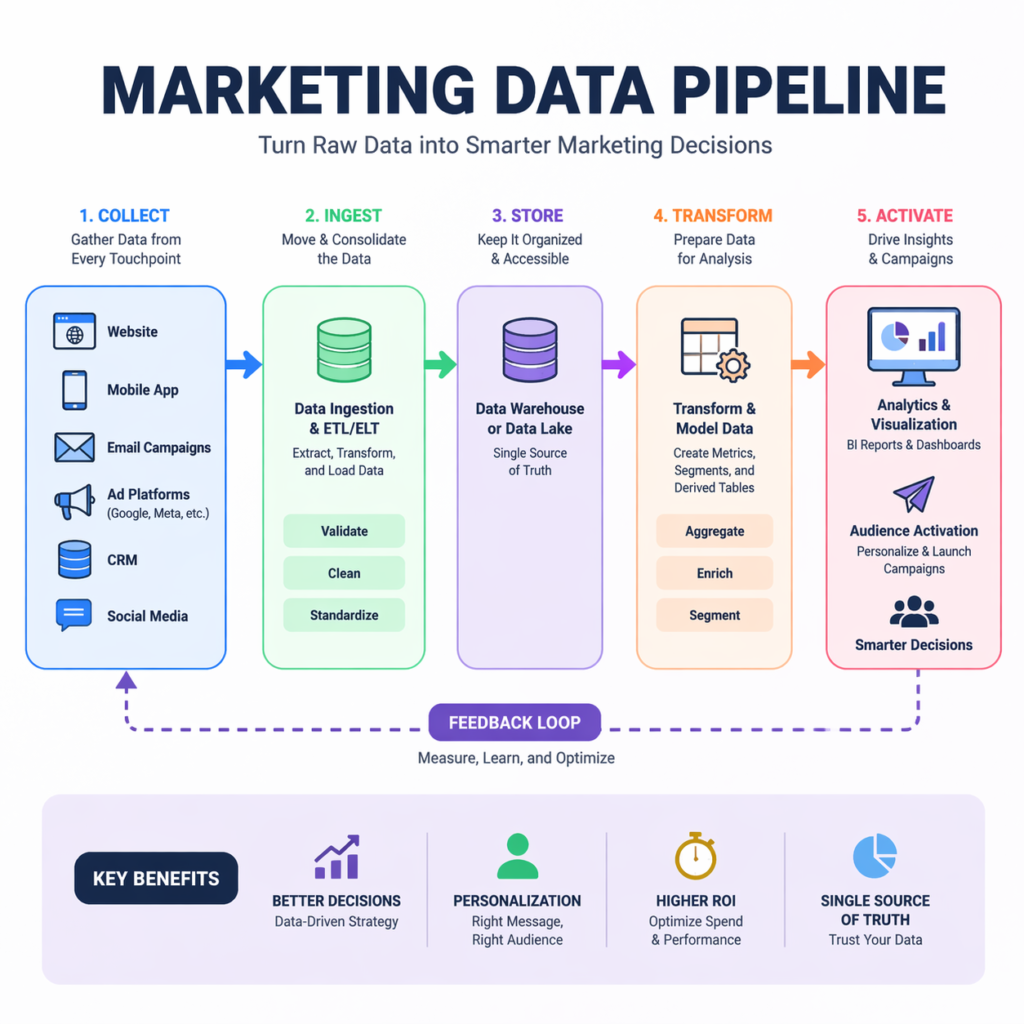
Building an effective system requires more than just connecting tools. A strong Marketing Data Pipeline includes several critical layers.
This is where data enters your system. It includes:
Strong data integration for marketing ensures all sources feed into one unified system.
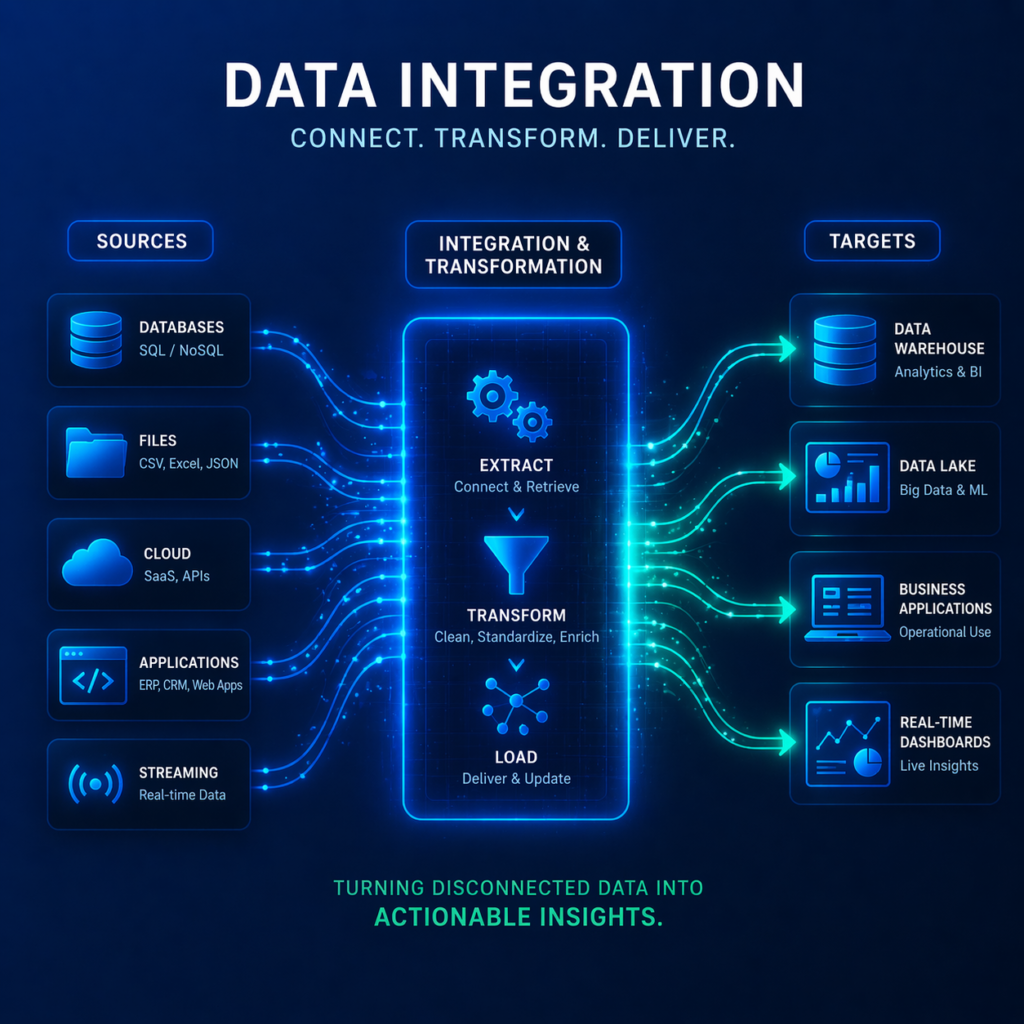
Once collected, data must be cleaned and standardized.
This involves:
This is where real-time data processing becomes essential for performance teams.
Processed data needs a centralized home.
Options include:
A scalable marketing data infrastructure ensures long-term reliability.
This is where data becomes actionable.
Tools used here include:
This layer directly supports performance marketing analytics.
Speed is everything in performance marketing. Waiting hours—or days—for reports can cost money.
With real-time data processing, teams can:
A modern Marketing Data Pipeline must support near real-time updates to stay competitive.
Attribution is one of the most complex challenges in marketing today.
Without proper tracking, you can’t answer:
Integrating marketing attribution models into your Marketing Data Pipeline ensures more accurate decision-making.
Let’s break this down into actionable steps.
Before building anything, align on goals.
Ask:
A successful Marketing Data Pipeline is built around business outcomes—not just technology.
Tool selection matters. Your stack should support:
If you’re unsure where to start, explore professional solutions through data and analytics services.
Manual data handling leads to errors and inefficiency.
Automation ensures:
Strong data integration for marketing is the backbone of any reliable pipeline.
Data quality is everything.
You need:
Without governance, even the best Marketing Data Pipeline will fail.
Batch processing is no longer enough.
Modern systems must support:
This enhances performance marketing analytics and decision-making speed.
Your data is only useful if it’s understandable.
Dashboards should be:
This is where your Marketing Data Pipeline delivers real value.
Building is one thing—maintaining is another.
A strong Marketing Data Pipeline evolves with your business.
Building and maintaining a pipeline internally can be complex.
That’s where Engine Analytics comes in.
They specialize in:
If you’re looking to build or improve your pipeline, you can get in touch with their team for tailored solutions.
The importance of data pipelines is widely recognized.
According to Gartner organizations that invest in strong data infrastructure outperform competitors in decision-making speed and accuracy.
Similarly, Harvard Business Review highlights that data-driven teams are significantly more effective at optimizing marketing performance.
These insights reinforce the value of building a robust Marketing Data Pipeline.
Even well-funded projects can fail due to poor planning.
A focused, well-designed Marketing Data Pipeline avoids these traps.
As technology evolves, pipelines will become even more advanced.
Despite these changes, the foundation remains the same: a reliable Marketing Data Pipeline that supports performance teams.
A well-designed Marketing Data Pipeline is more than a technical system—it’s a strategic advantage.
It empowers performance teams to:
If your current setup isn’t delivering these outcomes, it’s time to rethink your approach.
Explore how Engine Analytics can help you build a pipeline that actually supports your goals, or connect directly through their contact page to get started.
A Marketing Data Pipeline is a system that automatically collects data from different marketing platforms—like Google Ads, social media, email tools, and your website—and brings it all into one place. It then cleans, organizes, and prepares that data so it’s easy to analyze.
In simple terms, it acts like a “data highway” that moves information from multiple sources into a central dashboard or database. Instead of manually pulling reports from different tools, everything is updated automatically and consistently.
This helps teams save time, reduce errors, and focus more on strategy rather than data collection.
Data integration for marketing is important because modern campaigns run across many platforms, each with its own data format and metrics. Without integration, teams end up working with disconnected data, which leads to confusion and inaccurate reporting.
When data is properly integrated:
This unified view helps marketers understand what’s actually driving results, rather than relying on isolated or incomplete data. Ultimately, it leads to smarter decisions and better use of budget.
A Marketing Data Pipeline improves performance marketing by making data accurate, accessible, and actionable in real time.
Instead of waiting for manual reports, teams can instantly see how campaigns are performing and make quick adjustments. This is especially important in paid media, where timing directly impacts ROI.
With a strong pipeline, teams can:
It also supports better attribution, helping marketers understand the full customer journey rather than just the last click.
