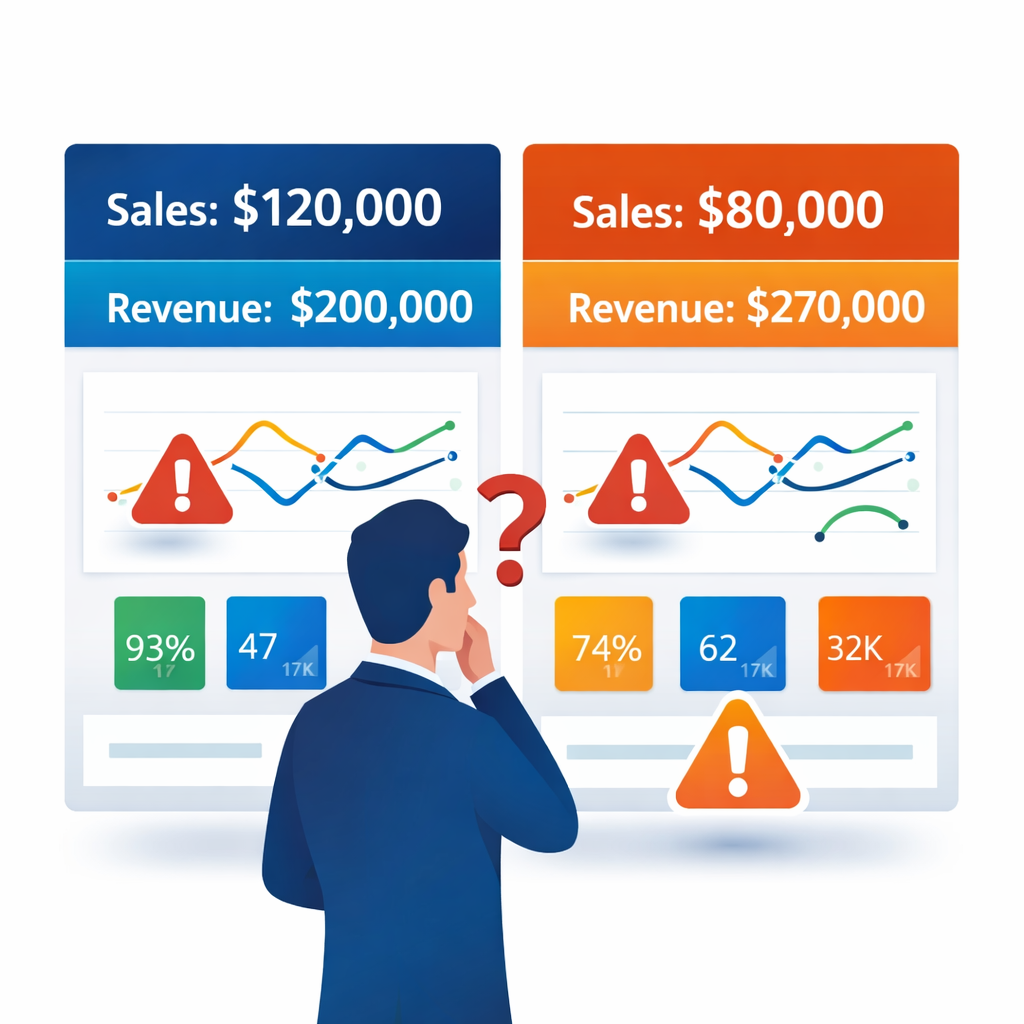
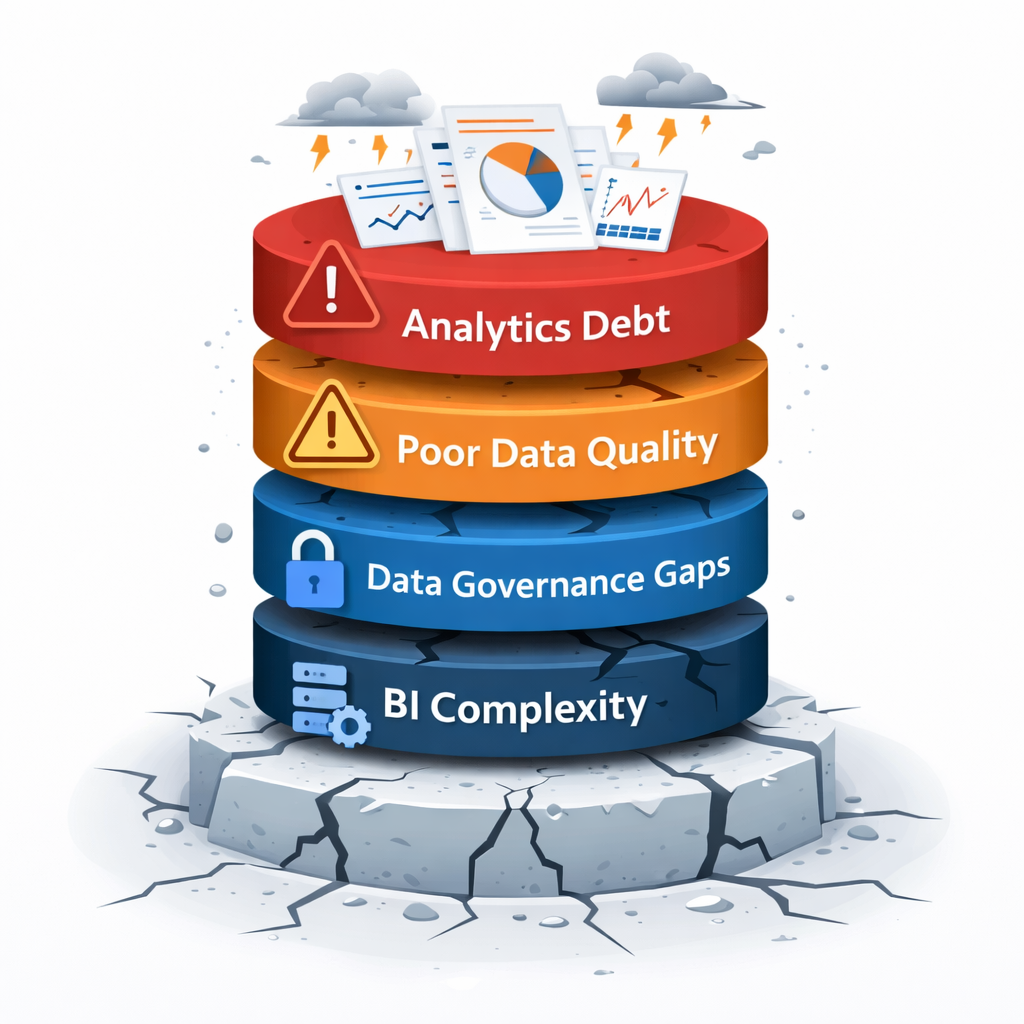
Every organization today claims to be data-driven. Dashboards are everywhere, reports are automated, and analytics tools are stacked across departments. Yet many of these organizations quietly struggle to trust their data, scale insights, or turn analytics into measurable outcomes. The root cause is often invisible until it becomes critical: Analytics Debt.
Unlike technical failures that cause immediate disruption, analytics debt accumulates slowly. It grows through rushed implementations, inconsistent metrics, undocumented pipelines, and short-term fixes that compound over time. Eventually, leaders notice delayed insights, conflicting reports, and teams spending more time fixing data than using it. By then, analytics has shifted from a strategic asset to an operational burden.
This article explores what analytics debt really is, how it forms, why it is so damaging, and how organizations can eliminate it before it undermines long-term growth. If your analytics environment feels complex, fragile, or difficult to trust, understanding analytics debt is the first step toward recovery.
What Is Analytics Debt?
Analytics debt refers to the accumulated cost of poor analytics decisions made over time. It arises when speed is prioritized over structure, and when analytics systems are built without long-term governance, scalability, or alignment in mind.
Just as financial debt accrues interest, analytics debt compounds. Each workaround, manual fix, or duplicated metric increases complexity and reduces clarity. Eventually, the effort required to maintain analytics systems outweighs the value they deliver.
How Analytics Debt Differs from Traditional Technical Debt
While analytics debt overlaps with Technical Debt in Analytics, it is broader in scope. It affects not just infrastructure, but also data models, metrics, processes, and decision-making behavior.
Analytics debt typically includes:
Inconsistent KPIs across teams
Fragile data pipelines with undocumented logic
Overlapping dashboards showing different numbers
Lack of ownership for data definitions
These issues directly impact trust, speed, and confidence in analytics outputs.
How Analytics Debt Builds Up Over Time
Analytics debt rarely appears overnight. It develops through a series of reasonable decisions made under pressure, often with good intentions.
Rapid Growth Without Structure
As organizations scale, analytics is often built reactively. New tools are added, reports are duplicated, and data sources multiply. Without a unified strategy, complexity increases faster than insight.
Data Governance Gaps
One of the most common contributors to analytics debt is Data Governance Gaps. When there are no clear standards for data ownership, definitions, or access, inconsistency becomes inevitable.
Governance gaps often lead to:
Multiple versions of the same metric
Unclear data accountability
Inconsistent reporting across departments
Without governance, analytics becomes fragmented and unreliable.
Short-Term Fixes That Become Permanent
Temporary solutions have a habit of becoming permanent. Manual spreadsheets, hardcoded logic, and one-off scripts often remain in place long after their original purpose has passed, quietly adding to analytics debt.
The Hidden Costs of Analytics Debt
Analytics debt does not show up directly on balance sheets, but its impact is measurable and significant.
Slower Decision-Making
When teams cannot trust dashboards, they delay decisions. Meetings shift from discussing actions to debating numbers. This hesitation erodes competitive advantage and agility.
Increased BI System Complexity
As analytics debt grows, so does BI System Complexity. More tools, more reports, and more dependencies make systems harder to maintain and harder to understand.
Symptoms of excessive complexity include:
Long onboarding times for analysts
Frequent dashboard failures
High maintenance effort for simple changes
Complexity becomes a tax on every analytics initiative.
Declining Data Confidence
When data inconsistencies persist, trust erodes. Leaders stop relying on analytics and revert to intuition, undermining years of investment in data platforms and talent.