
Modern businesses depend on data to improve decisions, understand customer behavior, forecast growth, and stay ahead of competitors. Yet many organizations are discovering that maintaining large internal analytics departments is expensive, slow, and difficult to scale. As a result, many fast-growing companies are now Replacing In-House Data Teams with external experts who provide flexibility, speed, and specialized skills.
The shift is not simply about reducing payroll expenses. Businesses want access to advanced analytics capabilities without spending years building internal structures. Hiring, training, retaining, and managing analysts, engineers, and visualization specialists often requires significant investment. In highly competitive markets, companies cannot afford delays in reporting, forecasting, or strategic planning.
This growing demand for efficiency has accelerated the popularity of data analytics outsourcing. Businesses now work with outsourced data specialists who deliver expertise across data engineering, reporting, automation, and predictive analysis. Companies also gain access to scalable data operations that adapt quickly as business needs evolve.
Organizations across finance, ecommerce, healthcare, logistics, and technology are Replacing In-House Data Teams because outsourced partnerships often produce faster results with fewer operational barriers. Companies that want flexible analytics support can explore the services available at Engine Analytics to understand how modern data partnerships improve performance.
For years, businesses relied heavily on internal analytics departments to manage reporting and insights. While this structure worked for some organizations, rapid digital transformation has exposed several limitations.
Hiring experienced analysts and engineers is increasingly expensive. Skilled professionals demand competitive salaries, bonuses, and long-term incentives. Many businesses struggle to recruit talent quickly enough to support expansion.
When companies begin Replacing In-House Data Teams, they often discover that outsourcing provides access to senior specialists without the overhead associated with full-time hiring. This approach reduces recruitment cycles while ensuring projects continue moving forward.
Data professionals frequently change roles because the market is highly competitive. Businesses lose time and money whenever key employees resign. Knowledge gaps also affect reporting consistency and strategic planning.
Outsourced providers reduce this disruption by maintaining stable teams with documented workflows and shared expertise. Instead of depending on individual employees, businesses gain continuity and structured support.
Many companies experience fluctuating analytics demands throughout the year. Product launches, seasonal growth, and expansion projects may require additional support for short periods.
Maintaining large in-house data teams during slower periods can become financially inefficient. Outsourcing allows businesses to scale resources up or down based on current operational requirements.
External analytics partners provide specialized knowledge developed through experience across multiple industries. This broader exposure helps companies improve efficiency and avoid common mistakes.
Outsourced data specialists typically work with different platforms, industries, and reporting environments. They understand how to integrate tools, automate dashboards, and optimize data pipelines quickly.
According to Gartner, organizations increasingly prioritize flexible technology partnerships to improve operational agility. Businesses benefit when external experts introduce proven systems and efficient workflows.
Companies Replacing In-House Data Teams often notice immediate improvements in reporting accuracy and decision-making speed because specialists focus entirely on analytics performance.
Internal hiring and onboarding processes may take months before teams become productive. Outsourced partners already have experienced professionals ready to begin immediately.
This faster deployment helps companies launch analytics projects without delays. Businesses entering competitive markets especially benefit from quick reporting systems and reliable forecasting capabilities.
Managing internal analytics environments requires software licenses, cloud resources, compliance monitoring, and security management. External providers frequently handle much of this infrastructure responsibility.
As companies continue Replacing In-House Data Teams, they gain the advantage of enterprise-level systems without maintaining every technical component internally.

Cost efficiency remains one of the strongest reasons companies choose outsourcing solutions. However, savings extend beyond salaries alone.
Businesses reduce expenses related to:
This allows organizations to redirect budgets toward growth initiatives, customer acquisition, and innovation.
Outsourcing agreements typically provide fixed or scalable pricing models. Businesses can forecast expenses more accurately instead of managing unpredictable staffing costs.
Companies Replacing In-House Data Teams appreciate having financial flexibility while still maintaining access to advanced analytical capabilities.
Analytics projects succeed when insights lead to measurable business improvements. External specialists often deliver optimized reporting structures that identify opportunities faster.
Research from McKinsey & Company shows that organizations using advanced analytics effectively are more likely to outperform competitors in profitability and operational efficiency.
Modern companies must adapt quickly to changing customer behavior, economic conditions, and market trends. Analytics flexibility plays a major role in maintaining competitiveness.
When organizations launch new products or expand into new markets, analytics requirements change immediately. Outsourced providers can often deploy additional specialists faster than internal hiring teams.
This flexibility explains why many companies are Replacing In-House Data Teams as part of broader digital transformation strategies.
Analytics technology evolves rapidly. Internal departments may struggle to keep pace with new visualization platforms, automation tools, and artificial intelligence systems.
Outsourced partners invest continuously in training and technology upgrades because their reputation depends on delivering modern solutions.
Global companies often require reporting support across different time zones. Outsourced analytics providers may offer extended coverage that internal departments cannot easily maintain.
This helps businesses monitor operations continuously and respond faster to critical performance changes.
Business intelligence services transform raw data into actionable insights. Companies increasingly rely on these services to improve forecasting, customer targeting, and operational planning.
Executives need reliable information presented in clear dashboards and reports. Outsourced teams build streamlined reporting systems that support faster strategic decisions.
Organizations Replacing In-House Data Teams often experience better alignment between leadership goals and analytics outcomes because external specialists focus on measurable performance indicators.
Modern dashboards simplify complex information for leadership teams. Clear visual reporting helps businesses identify trends, risks, and opportunities more efficiently.
Professional analytics providers frequently implement structured governance processes that improve data quality, consistency, and compliance standards.
Companies working with experienced providers can reduce reporting errors while improving confidence in strategic decisions.
Businesses seeking reliable analytics expertise can review the solutions offered through the Engine Analytics services page to learn how outsourcing improves operational visibility.
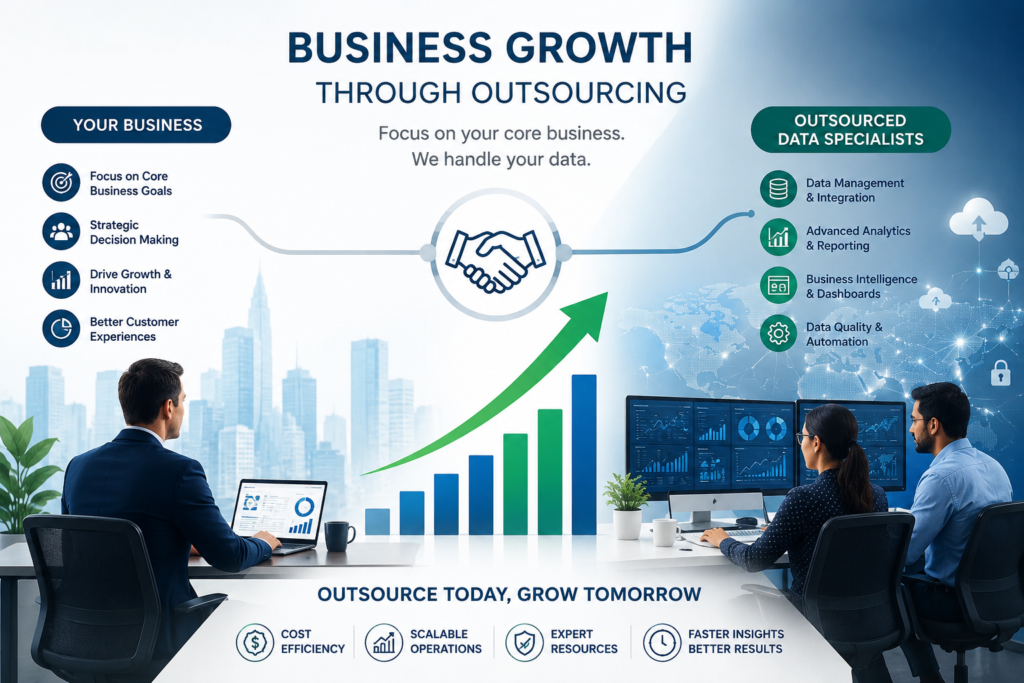
Not every organization requires a fully outsourced analytics structure. However, several indicators suggest outsourcing may provide better results.
Manual spreadsheets and repetitive reporting tasks reduce productivity. Automated analytics systems improve speed and accuracy significantly.
If open analytics positions remain vacant for months, business performance may suffer. Outsourced support provides immediate access to skilled professionals.
Rapidly growing payroll expenses may indicate inefficient resource allocation. Outsourcing offers scalable support without permanent staffing expansion.
Executives cannot wait weeks for updated reports. Businesses Replacing In-House Data Teams often prioritize real-time dashboards and automated reporting systems.
Choosing the right analytics provider requires careful evaluation. Successful partnerships depend on communication, transparency, and strategic alignment.
Organizations should identify specific outcomes before beginning an outsource.
The modern business environment demands speed, flexibility, and accurate decision-making. That is why more organizations are Replacing In-House Data Teams and partnering with outsourced specialists who can deliver expert insights without the high operational burden of maintaining large internal departments.
From reducing hiring costs to improving scalability and gaining access to advanced analytics expertise, outsourcing has become a practical solution for businesses aiming to grow efficiently. Companies that embrace data analytics outsourcing can streamline reporting, strengthen forecasting, and build scalable data operations that support long-term success.
As competition continues to increase across industries, businesses need agile analytics strategies that adapt quickly to changing market demands. Working with experienced outsourced data specialists allows organizations to focus on innovation and growth while ensuring reliable, data-driven decision-making at every stage.
If your company is ready to improve efficiency, enhance reporting, and unlock the full value of its data, visit Engine Analytics today to explore tailored analytics solutions designed for modern growing businesses.
Many businesses are Replacing In-House Data Teams to reduce hiring costs, avoid lengthy recruitment processes, and gain access to experienced analytics professionals. Outsourced specialists also help companies scale faster and improve reporting efficiency without maintaining large internal departments.
Data analytics outsourcing provides businesses with faster reporting, advanced technical expertise, improved automation, and lower operational costs. It also allows companies to focus on core business activities while experts handle dashboards, forecasting, and business intelligence services.
Yes. Outsourced analytics teams are highly flexible and can easily adapt to changing business needs. They help growing companies build scalable data operations, manage increasing data volumes, and deliver real-time insights that support smarter business decisions.
