Analytics Debt: The Silent Killer of Data-Driven Organizations

Table of Contents


Every organization today claims to be data-driven. Dashboards are everywhere, reports are automated, and analytics tools are stacked across departments. Yet many of these organizations quietly struggle to trust their data, scale insights, or turn analytics into measurable outcomes. The root cause is often invisible until it becomes critical: Analytics Debt.

Unlike technical failures that cause immediate disruption, analytics debt accumulates slowly. It grows through rushed implementations, inconsistent metrics, undocumented pipelines, and short-term fixes that compound over time. Eventually, leaders notice delayed insights, conflicting reports, and teams spending more time fixing data than using it. By then, analytics has shifted from a strategic asset to an operational burden.

This article explores what analytics debt really is, how it forms, why it is so damaging, and how organizations can eliminate it before it undermines long-term growth. If your analytics environment feels complex, fragile, or difficult to trust, understanding analytics debt is the first step toward recovery.

What Is Analytics Debt?

Analytics debt refers to the accumulated cost of poor analytics decisions made over time. It arises when speed is prioritized over structure, and when analytics systems are built without long-term governance, scalability, or alignment in mind.

Just as financial debt accrues interest, analytics debt compounds. Each workaround, manual fix, or duplicated metric increases complexity and reduces clarity. Eventually, the effort required to maintain analytics systems outweighs the value they deliver.

How Analytics Debt Differs from Traditional Technical Debt

While analytics debt overlaps with Technical Debt in Analytics, it is broader in scope. It affects not just infrastructure, but also data models, metrics, processes, and decision-making behavior.

Analytics debt typically includes:

  • Inconsistent KPIs across teams

  • Fragile data pipelines with undocumented logic

  • Overlapping dashboards showing different numbers

  • Lack of ownership for data definitions

These issues directly impact trust, speed, and confidence in analytics outputs.

How Analytics Debt Builds Up Over Time

Analytics debt rarely appears overnight. It develops through a series of reasonable decisions made under pressure, often with good intentions.

Rapid Growth Without Structure

As organizations scale, analytics is often built reactively. New tools are added, reports are duplicated, and data sources multiply. Without a unified strategy, complexity increases faster than insight.

Data Governance Gaps

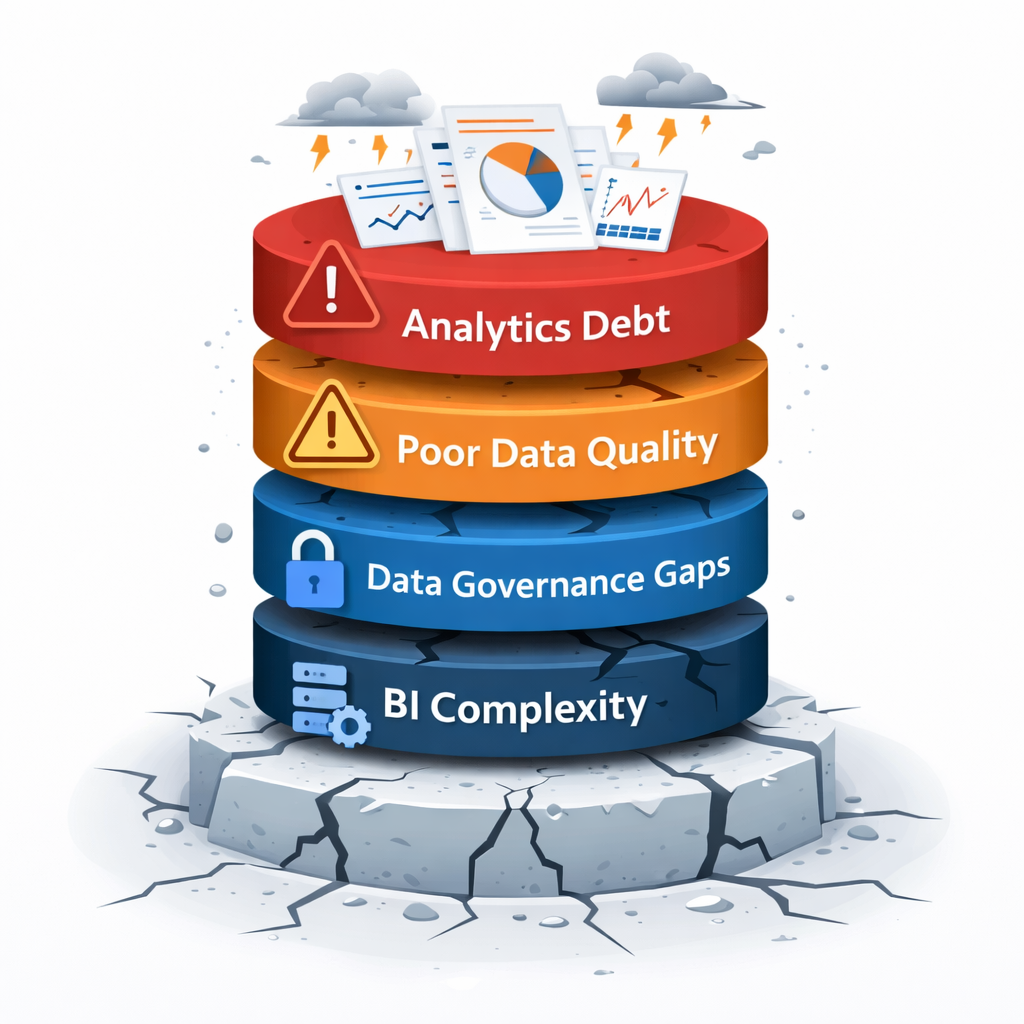
One of the most common contributors to analytics debt is Data Governance Gaps. When there are no clear standards for data ownership, definitions, or access, inconsistency becomes inevitable.

Governance gaps often lead to:

  • Multiple versions of the same metric

  • Unclear data accountability

  • Inconsistent reporting across departments

Without governance, analytics becomes fragmented and unreliable.

Short-Term Fixes That Become Permanent

Temporary solutions have a habit of becoming permanent. Manual spreadsheets, hardcoded logic, and one-off scripts often remain in place long after their original purpose has passed, quietly adding to analytics debt.

The Hidden Costs of Analytics Debt

Analytics debt does not show up directly on balance sheets, but its impact is measurable and significant.

Slower Decision-Making

When teams cannot trust dashboards, they delay decisions. Meetings shift from discussing actions to debating numbers. This hesitation erodes competitive advantage and agility.

Increased BI System Complexity

As analytics debt grows, so does BI System Complexity. More tools, more reports, and more dependencies make systems harder to maintain and harder to understand.

Symptoms of excessive complexity include:

  • Long onboarding times for analysts

  • Frequent dashboard failures

  • High maintenance effort for simple changes

Complexity becomes a tax on every analytics initiative.

Declining Data Confidence

When data inconsistencies persist, trust erodes. Leaders stop relying on analytics and revert to intuition, undermining years of investment in data platforms and talent.


Analytics Debt


Analytics Debt and Poor Data Quality

Few issues accelerate analytics debt faster than Poor Data Quality. Inaccurate, incomplete, or outdated data forces teams to compensate with manual checks and corrections.

How Poor Data Quality Fuels Debt

Poor data quality leads to:

  • Repeated validation efforts

  • Conflicting reports across tools

  • Reduced confidence in insights

Each workaround adds more layers to analytics systems, making them harder to fix later.

The Feedback Loop Problem

Analytics debt and poor data quality reinforce each other. As debt grows, fixing quality issues becomes harder. As quality declines, debt increases further. Breaking this cycle requires intentional intervention.

Data Strategy Misalignment: A Major Risk Factor

Another major contributor to analytics debt is Data Strategy Misalignment. When analytics initiatives are not aligned with business goals, systems grow without direction.

Misaligned Metrics and KPIs

Without strategic alignment, teams optimize for different outcomes. Marketing, sales, and finance may track similar metrics differently, leading to confusion and conflict.

Tools Without Purpose

Adopting analytics tools without a clear strategy often increases debt. New platforms promise quick insights but introduce additional complexity when not integrated thoughtfully.

According to insights from Gartner, organizations with misaligned analytics strategies are significantly more likely to experience low ROI from data investments.

How Analytics Debt Impacts Data-Driven Culture

Analytics debt does more than slow systems. It reshapes behavior.

Analysts Spend More Time Fixing Than Analyzing

As debt increases, analysts shift from insight generation to system maintenance. This reduces morale and limits innovation.

Leaders Lose Confidence in Analytics

When numbers conflict, executives disengage. Analytics becomes optional rather than essential, weakening Data-Driven Decision Making across the organization.

Innovation Slows Down

With fragile systems, teams hesitate to experiment. Fear of breaking existing reports limits progress and adaptability.

Recognizing the Warning Signs of Analytics Debt

Early detection is critical. Organizations that recognize analytics debt early can address it before it becomes overwhelming.

Common warning signs include:

  • Frequent metric disputes in meetings

  • Multiple dashboards for the same question

  • Heavy reliance on spreadsheets for validation

  • Slow turnaround for simple analytics requests

If these issues feel familiar, analytics debt is likely already present.

Analytics Debt


How to Reduce and Prevent Analytics Debt

Eliminating analytics debt requires a deliberate, long-term approach.

Establish Strong Data Governance

Closing Data Governance Gaps is foundational. Clear ownership, standardized definitions, and documented processes reduce inconsistency and confusion.

Simplify BI Architecture

Reducing BI System Complexity improves reliability and scalability. Fewer tools, well-integrated platforms, and standardized models make analytics easier to manage.

Align Analytics With Business Strategy

Addressing Data Strategy Misalignment ensures analytics supports real business outcomes. Clear priorities guide tool selection, metric design, and investment decisions.

Invest in Sustainable Design

Well-modeled data, documented pipelines, and reusable components reduce Technical Debt in Analytics and improve long-term efficiency.

Organizations looking to modernize analytics foundations can explore structured solutions through the services offered on the Engine Analytics services page.

Building a Sustainable Analytics Future

Preventing analytics debt is not about perfection. It is about intentionality. Sustainable analytics environments evolve with the business while maintaining clarity, trust, and alignment.

Key Principles for Long-Term Success

  • Prioritize clarity over speed

  • Document decisions and definitions

  • Regularly audit analytics assets

  • Treat analytics as a product, not a project

Industry research from McKinsey & Company shows that organizations investing in sustainable data foundations consistently outperform peers in decision speed and accuracy.

Conclusion: Address Analytics Debt Before It Costs You Growth

Analytics Debt is rarely visible at first, but its impact grows steadily. It slows decisions, erodes trust, and turns analytics from a competitive advantage into a liability. The longer it remains unaddressed, the harder it becomes to fix.

Organizations that succeed with analytics do not avoid complexity entirely. They manage it intentionally. By closing governance gaps, improving data quality, reducing BI system complexity, and aligning analytics with strategy, businesses can reclaim confidence in their data.

If your organization is ready to reduce analytics debt and build a scalable, trusted analytics foundation, now is the time to act. Start by exploring insights and solutions at Engine Analytics or connect directly through the contact page to begin the transformation.

Here’s Some Interesting FAQs for You

Analytics debt typically builds up when organizations prioritize speed over structure in their analytics initiatives. Rapid business growth often leads to quick dashboard creation, duplicated reports, and disconnected data sources. Over time, data governance gaps, unclear ownership of metrics, and inconsistent definitions create confusion. When this is combined with poor data quality and analytics projects that are not aligned with overall business strategy, analytics systems become fragile, complex, and difficult to trust.

Analytics debt and technical debt are closely related but not the same. Technical debt focuses mainly on infrastructure, code quality, and system architecture. Analytics debt goes further by including poorly defined metrics, inconsistent business logic, lack of documentation, governance issues, and misaligned reporting. Even with modern tools and clean infrastructure, organizations can still accumulate analytics debt if decision frameworks and data ownership are unclear.

The time required to fix analytics debt depends on how deeply it is embedded in the organization’s analytics ecosystem. In many cases, noticeable improvements can be achieved within a few months by addressing governance, simplifying BI systems, and aligning analytics with business goals. Fully resolving analytics debt is an ongoing process, but organizations that take a structured approach often see faster insights, improved trust in data, and better decision-making early in the transformation.