In today’s data-rich business environment, leaders are under constant pressure to make faster, smarter, and more confident decisions. Dashboards are everywhere, reports are automated, and analytics tools are more powerful than ever. Yet one question continues to challenge executives, product owners, and data leaders alike: Operational Analytics vs Strategic Analytics — what should you build first?
This decision is not merely technical. It shapes how your organization responds to daily challenges, plans for long-term growth, and ultimately competes in the market. Choosing the wrong starting point can lead to stalled initiatives, low adoption, and analytics fatigue. Choosing the right one creates momentum, trust, and measurable business value.
This article explores the difference between operational and strategic analytics, when each is most valuable, and how to decide the right sequence for your business. By the end, you’ll have a clear framework to guide your Analytics Implementation Strategy and accelerate Data-Driven Decision Making with confidence.
Understanding Operational Analytics
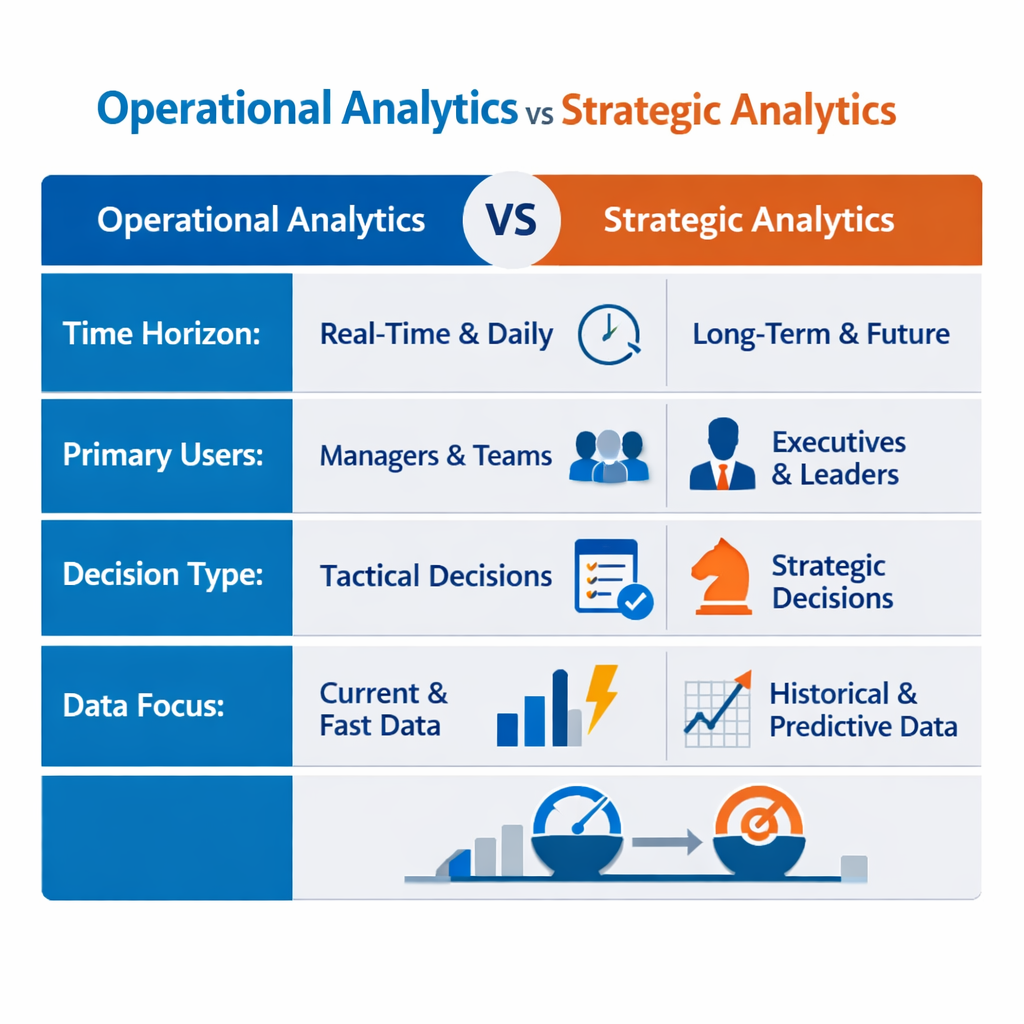
Operational Analytics focuses on the here and now. It is designed to help teams monitor, manage, and optimize day-to-day business activities. Instead of asking, “Where should the company go next year?” operational analytics asks, “What is happening right now, and what should we do about it?”
What Operational Analytics Really Does
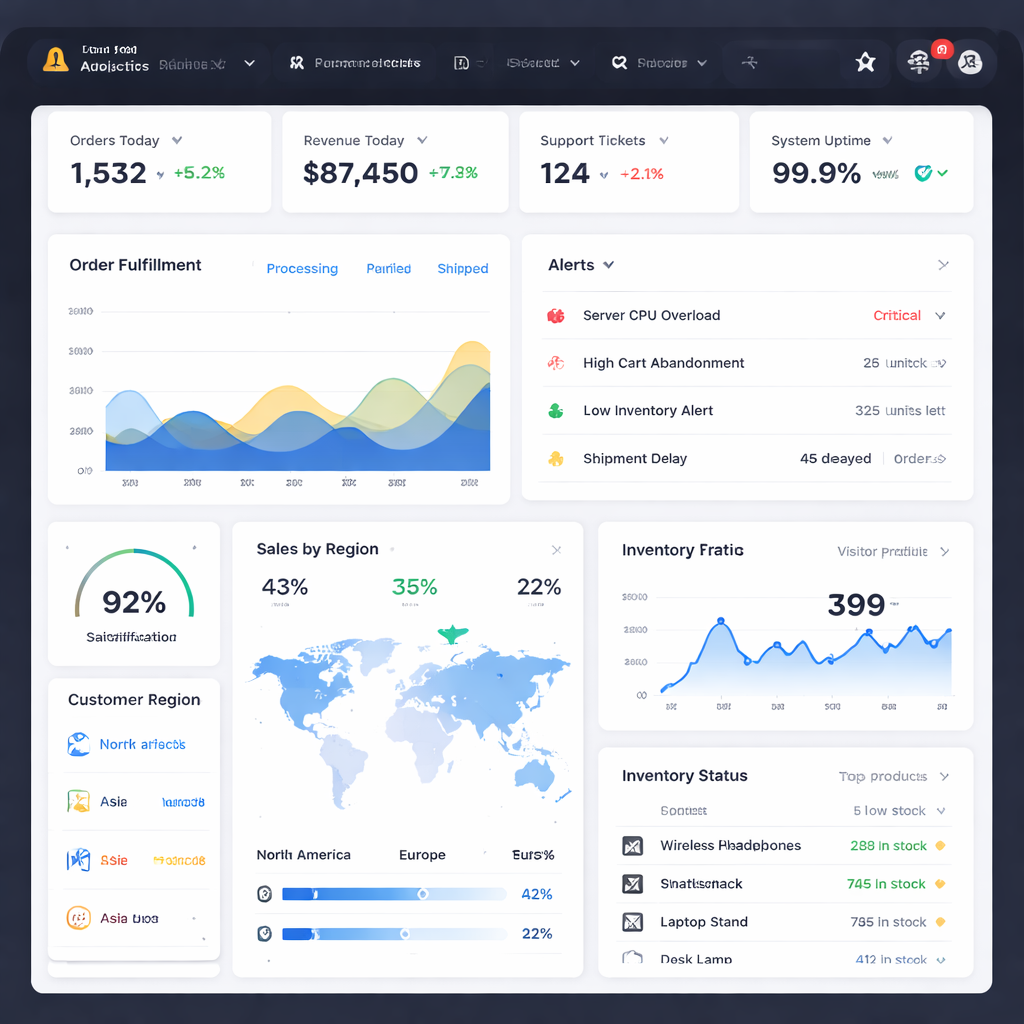
Operational analytics turns raw data into immediate insights that support frontline decision-making. It is deeply embedded into business workflows and often powers alerts, dashboards, and automated actions.
Common characteristics include:
Near real-time or real-time data processing
High data freshness and frequency
Focus on efficiency, productivity, and issue resolution
Used by operations, support, sales, logistics, and IT teams
This form of analytics often fuels Real-Time Business Intelligence, ensuring teams can act before small issues become costly problems.
Practical Examples of Operational Analytics
Operational analytics is already present in many successful organizations, even if it isn’t always labeled as such.
Examples include:
Monitoring system uptime and triggering alerts when performance drops
Tracking order fulfillment rates to prevent shipping delays
Managing call center queues to reduce customer wait times
Detecting anomalies in transactions to prevent fraud
In each case, analytics supports immediate action. There is little room for delay, and insights must be accurate, timely, and easy to interpret.
Understanding Strategic Analytics
Strategic Analytics operates at a different altitude. Instead of focusing on daily execution, it supports long-term planning, goal setting, and competitive positioning. It answers questions about direction, investment, and growth.
The Role of Strategic Analytics in Business
Strategic analytics combines historical data, trends, and predictive models to guide leadership decisions. It is less about speed and more about depth, context, and foresight.
Key characteristics include:
Aggregated and historical datasets
Advanced modeling and forecasting
Scenario analysis and trend identification
Used primarily by executives and senior leaders
This approach empowers organizations to make informed choices about markets, products, customers, and resources.