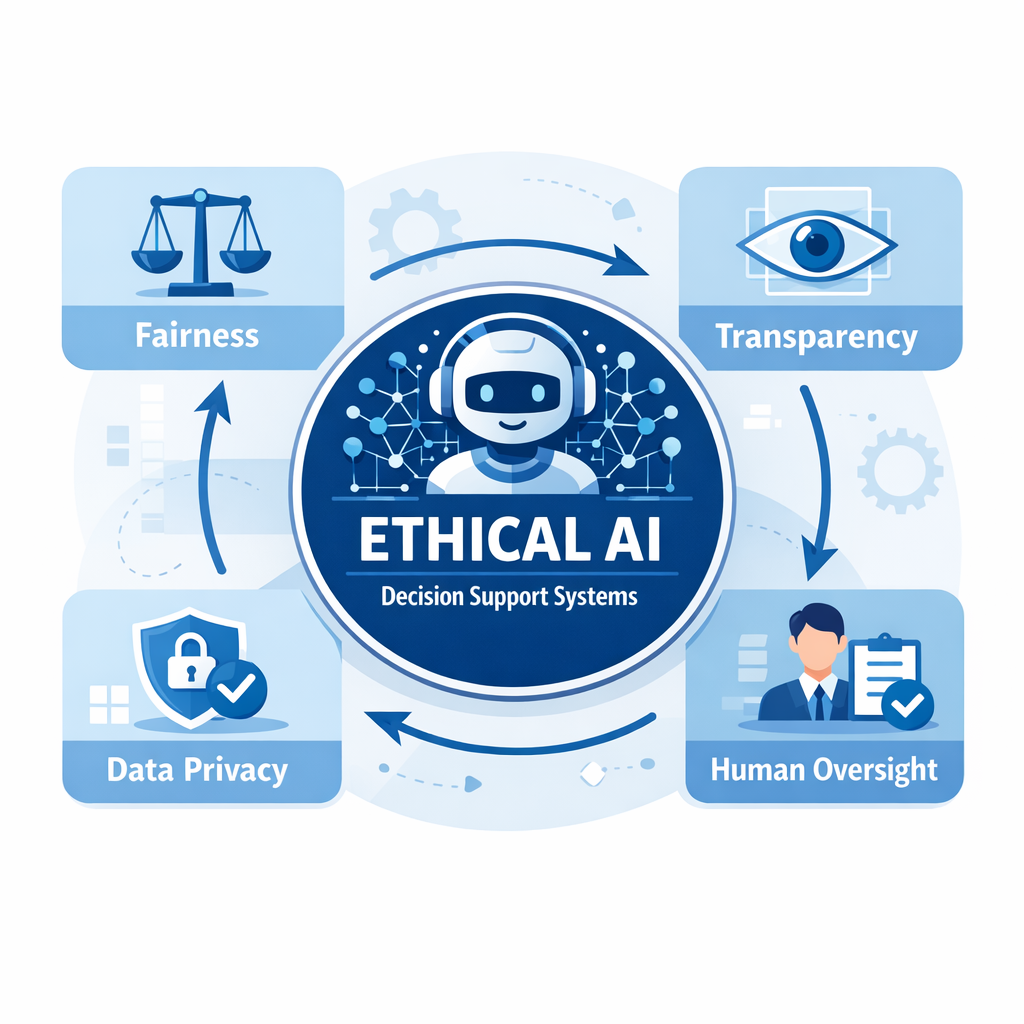
Artificial intelligence is rapidly transforming how organizations analyze data, forecast outcomes, and make informed choices. From finance and healthcare to manufacturing and marketing, AI-Driven Decision Support Systems are becoming essential tools for improving efficiency, accuracy, and strategic clarity. However, as these systems gain influence over critical decisions, ethical considerations are no longer optional—they are fundamental.
Ethical AI is not just about compliance or reputation management. It directly affects trust, fairness, transparency, and long-term business sustainability. Organizations that deploy intelligent decision-support technologies must understand the ethical implications tied to data usage, algorithm design, accountability, and governance. Without a responsible framework, even the most advanced AI system can cause unintended harm.
This article explores the key ethical considerations surrounding AI-Driven Decision Support Systems, focusing on fairness, transparency, privacy, and governance. It also outlines practical steps businesses can take to build ethically sound AI solutions while maintaining innovation and competitive advantage.
Understanding AI-Driven Decision Support Systems
AI-Driven Decision Support Systems are software platforms that use machine learning, predictive analytics, and data modeling to assist humans in making informed decisions. Unlike traditional rule-based systems, these tools learn from historical data, adapt to patterns, and provide recommendations rather than fixed outcomes.
Common use cases include:
Financial risk assessment
Demand forecasting
Medical diagnosis support
Fraud detection
Supply chain optimization
While these systems enhance decision quality, they also introduce ethical challenges that stem from data dependency, automation, and limited human oversight.
Why Ethics Matter in AI-Based Decision Making
Ethical concerns in AI are not hypothetical. Real-world cases have shown how biased algorithms, opaque models, and weak governance can negatively impact individuals and organizations. When AI-Driven Decision Support Systems influence hiring decisions, credit approvals, or healthcare recommendations, ethical failures can lead to discrimination, loss of trust, and legal consequences.
Ethics matter because they:
Protect individuals from unfair treatment
Preserve organizational credibility
Ensure regulatory compliance
Promote long-term AI sustainability
Incorporating AI ethics into decision-support frameworks helps organizations align technology with human values rather than replacing judgment with unchecked automation.
Algorithmic Bias: A Core Ethical Challenge
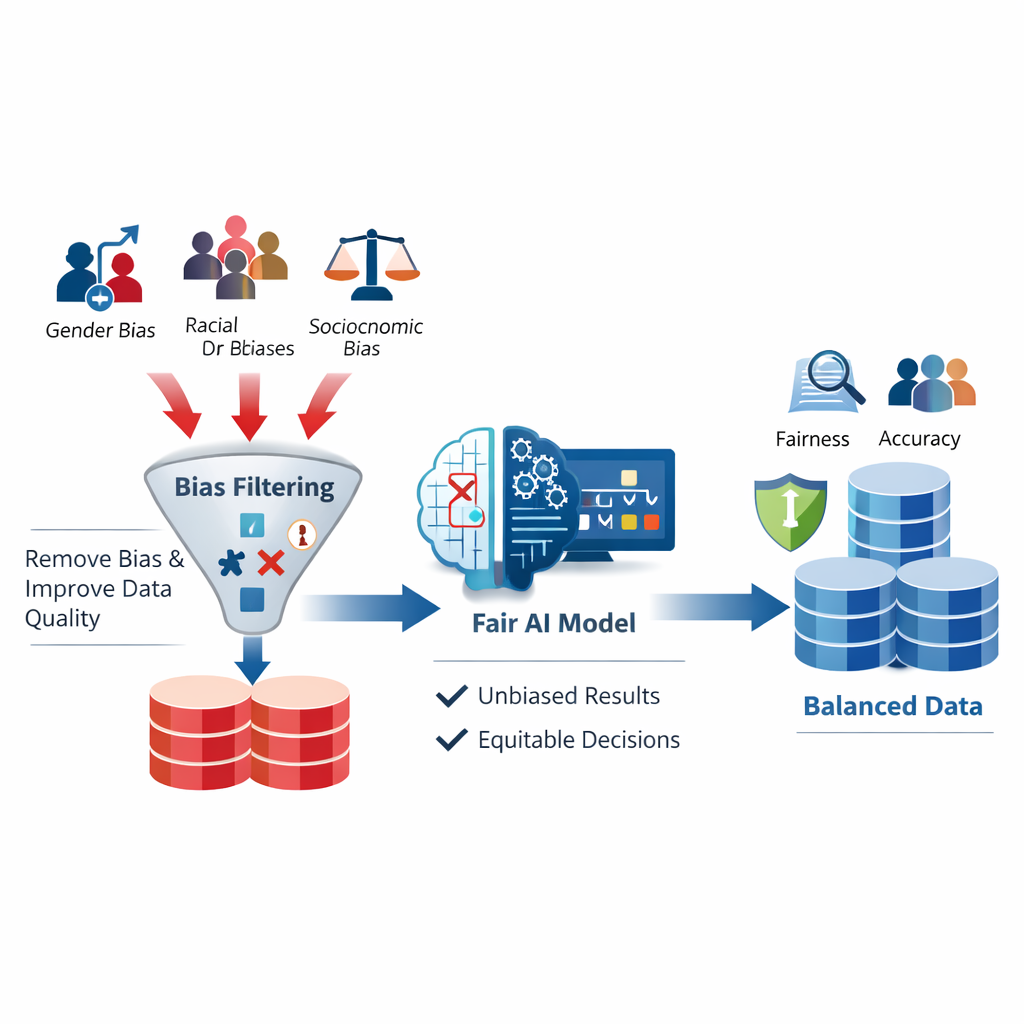
One of the most discussed issues in AI-Driven Decision Support Systems is algorithmic bias. Bias occurs when AI models produce systematically unfair outcomes due to skewed data, flawed assumptions, or incomplete representation.
Causes of Algorithmic Bias
Bias can enter decision-support systems through:
Historical data reflecting social inequalities
Limited or unbalanced datasets
Proxy variables that indirectly encode sensitive traits
Poor model validation practices
Even well-intentioned AI initiatives can unintentionally reinforce existing disparities if bias is not actively addressed.