How Real-Time Streaming Analytics Powers Operational Excellence

Table of Contents


In today’s hyperconnected digital economy, businesses no longer compete solely on products or pricing. They compete on speed, awareness, and the ability to act decisively in the moment. Data is no longer something to be reviewed at the end of the week or month; it is something that must be understood and acted upon instantly. This is where Real-Time Streaming Analytics becomes a strategic advantage rather than a technical luxury. Organizations that can process, analyze, and respond to live data flows gain sharper operational control, better customer experiences, and faster decision cycles.

Operational excellence depends on visibility and responsiveness. When leaders can see what is happening across systems, customers, and processes as events unfold, they can prevent issues before they escalate and seize opportunities before competitors react. Traditional batch-based analytics cannot keep up with this pace. Modern enterprises require analytics architectures that support immediacy, scalability, and intelligence at speed.

This article explores how Real-Time Streaming Analytics enables organizations to achieve operational excellence by transforming raw event data into timely, actionable insights. We will examine its core components, real-world use cases, architectural considerations, and how businesses can begin adopting it successfully. Along the way, we will also show how analytics partners like those behind Engine Analytics help organizations translate real-time data into sustained operational impact.

Understanding Real-Time Streaming Analytics

At its core, Real-Time Streaming Analytics is the practice of continuously analyzing data as it is generated. Unlike batch analytics, which processes data in large intervals, streaming analytics evaluates events the moment they occur. These events might include user interactions, sensor readings, transactions, log entries, or system alerts.

This approach allows organizations to react immediately rather than retrospectively. For operational teams, this shift changes analytics from a reporting function into a decision engine.

Key characteristics include:

  • Continuous ingestion of data from multiple sources

  • Low-latency analysis and transformation

  • Immediate detection of patterns, anomalies, or thresholds

  • Automated or human-triggered responses

By integrating Streaming Data Analytics into operational workflows, companies create feedback loops that continuously optimize performance rather than correcting issues after the fact.

Why Operational Excellence Requires Real-Time Insights

Operational excellence is about consistency, efficiency, and continuous improvement. Achieving it requires accurate situational awareness at all times. Delayed insights introduce risk, inefficiency, and lost revenue.

With Real-Time Streaming Analytics, organizations can:

  • Identify bottlenecks the moment they form

  • Detect system failures before customers are affected

  • Optimize resources dynamically

  • Align operations with real customer behavior

This level of responsiveness is essential for modern digital operations, where milliseconds often matter more than margins.

Real-Time Streaming Analytics

From Batch Analytics to Streaming Data Analytics

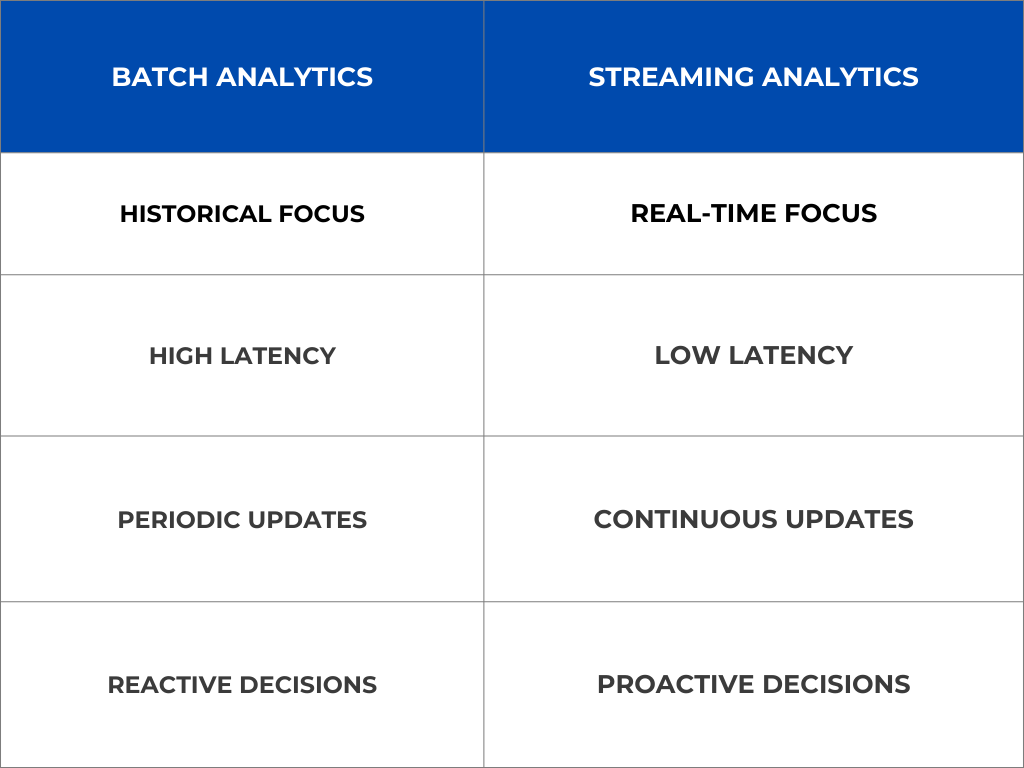
Traditional analytics architectures were designed for a slower business environment. Data was collected, stored, and analyzed in periodic batches. While this model works for historical reporting, it struggles in operational contexts.

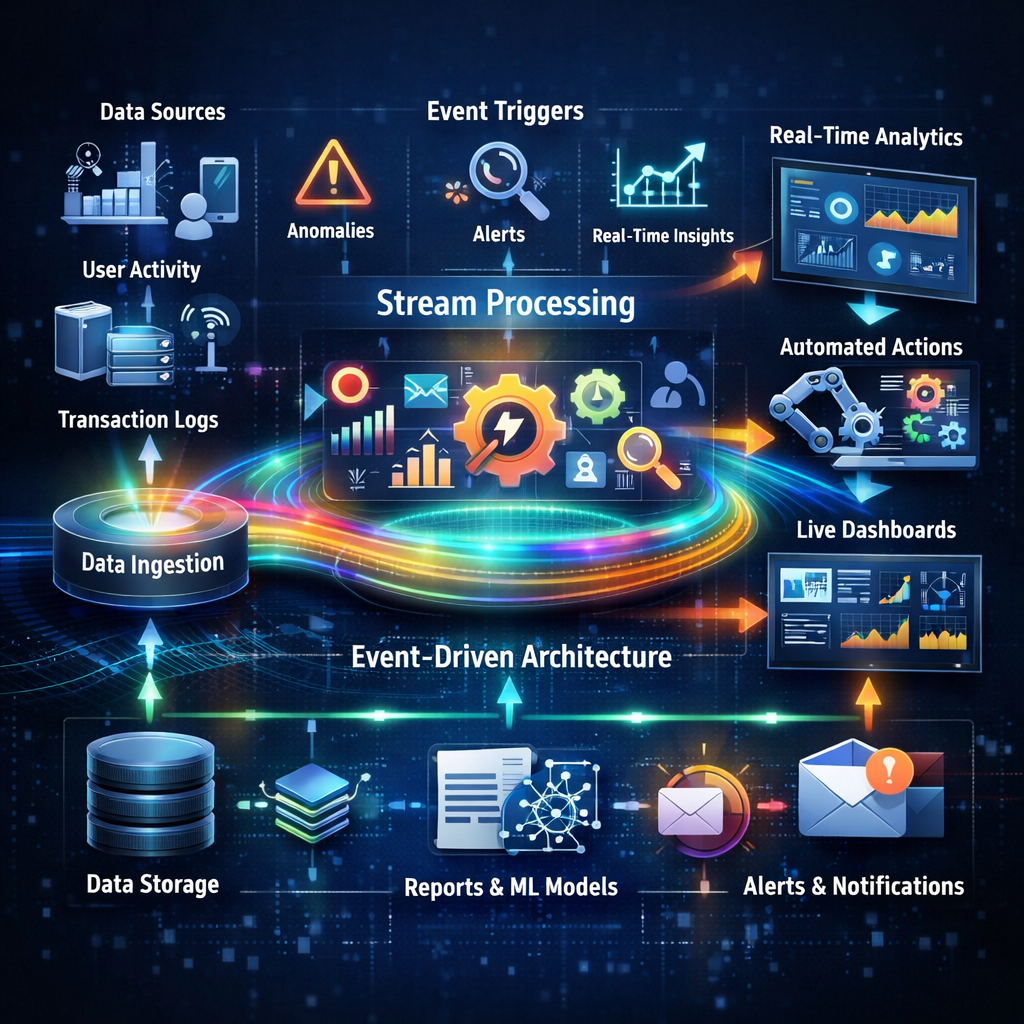
Streaming Data Analytics replaces delay with continuity. Data flows through Live Data Pipelines, is processed instantly, and feeds dashboards, alerts, and automated actions in near real time.

Key differences include:

Real-Time Streaming Analytics

This transition is fundamental to building agile, resilient operations.

Real-Time Data Processing as an Operational Backbone

Real-Time Data Processing serves as the technical foundation for streaming analytics. It ensures that incoming data is cleaned, enriched, and analyzed without delay. This capability allows operational systems to respond dynamically as conditions change.

For example, in manufacturing, sensor data can trigger maintenance workflows before equipment fails. In retail, real-time transaction streams can adjust pricing or inventory allocation instantly. These capabilities directly support Operational Excellence by minimizing waste and downtime.

Modern platforms integrate processing engines, scalable infrastructure, and analytics layers into unified pipelines. When implemented correctly, they become invisible enablers of day-to-day excellence.

Event-Driven Analytics and Intelligent Automation

Event-Driven Analytics builds on streaming concepts by focusing on specific triggers. An event might be a failed login, a delayed shipment, or a sudden spike in demand. Each event carries context and meaning.

When organizations combine Real-Time Streaming Analytics with event-driven architectures, they unlock intelligent automation. Systems no longer wait for human intervention; they act based on predefined logic and thresholds.

Benefits include:

  • Faster incident response

  • Reduced manual monitoring

  • Consistent decision-making

  • Improved scalability

Event-driven systems are especially powerful in high-volume environments where manual oversight is impractical.

Live Data Pipelines and System Reliability

Live Data Pipelines are the circulatory system of real-time analytics. They move data from source systems to analytics engines and downstream applications without interruption. Reliability is critical, because operational decisions depend on accurate, timely data.

High-quality pipelines ensure:

  • Fault tolerance and resilience

  • Consistent data quality

  • Horizontal scalability

  • Secure data movement

Organizations that invest in robust pipelines are better positioned to scale analytics initiatives without compromising trust in the data.

Industry Use Cases Driving Operational Excellence

Financial Services

Banks and payment platforms use Real-Time Streaming Analytics to monitor transactions, detect fraud, and manage risk. Immediate insights reduce financial losses and protect customers.

E-commerce and Retail

Retailers analyze live customer behavior to optimize recommendations, inventory, and promotions. Real-time insights directly influence conversion rates and customer satisfaction.

Manufacturing and IoT

Factories rely on Streaming Data Analytics to monitor equipment health and production efficiency. Predictive maintenance reduces downtime and extends asset life.

Logistics and Supply Chain

Live tracking data enables companies to reroute shipments, manage delays, and communicate accurately with customers.

These examples demonstrate how analytics becomes a core operational capability rather than a reporting tool.

Measuring Success Beyond Dashboards

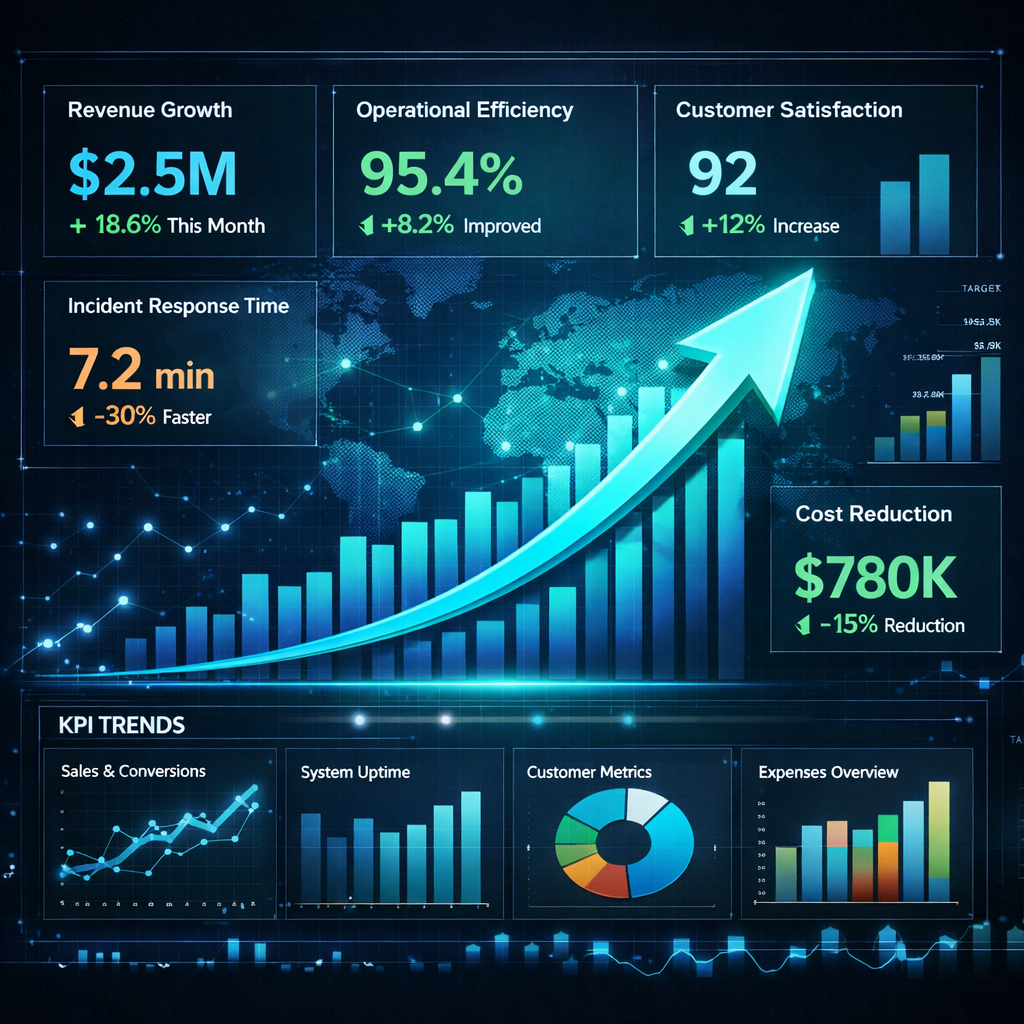
Operational excellence is not achieved by dashboards alone. It requires outcomes. Organizations must define success metrics that reflect real-world improvements.

Examples include:

  • Reduced incident response times

  • Higher system uptime

  • Lower operational costs

  • Improved customer satisfaction scores

By linking analytics outputs to operational KPIs, businesses ensure that insights translate into measurable impact.

Building a Scalable Real-Time Analytics Architecture

A successful implementation starts with architecture. Scalability, resilience, and integration must be considered from the beginning.

Key components include:

  1. Event ingestion layers

  2. Stream processing engines

  3. Analytics and visualization tools

  4. Alerting and automation systems

Many organizations partner with analytics specialists to design and deploy these systems effectively. Providers like those behind Services help ensure architectures align with both technical and business goals.

Real-Time Streaming Analytics


Governance, Security, and Trust in Real-Time Systems

Speed must not compromise governance. Real-time systems handle sensitive data and mission-critical decisions. Strong controls are essential.

Best practices include:

  • Role-based access controls

  • Data validation and monitoring

  • Clear ownership and accountability

  • Compliance-aware pipeline design

Operational excellence depends on trust in the data. Without it, even the fastest insights lose value.

Integrating Real-Time Analytics Into Daily Operations

Analytics delivers value only when embedded into workflows. Alerts, dashboards, and automated actions should integrate seamlessly with operational tools.

Successful organizations:

  • Surface insights where decisions are made

  • Minimize friction between insight and action

  • Continuously refine logic based on feedback

This integration transforms analytics from a separate function into an operational habit.

Learning From Industry Leaders

Companies leading in real-time analytics often share architectural principles and lessons learned. Resources from platforms like Kafka provide valuable perspectives on building scalable, event-driven systems.

Studying these examples helps organizations avoid common pitfalls and accelerate adoption.

Overcoming Common Adoption Challenges

Despite its benefits, Real-Time Streaming Analytics adoption presents challenges. These include cultural resistance, skills gaps, and infrastructure complexity.

Common obstacles and solutions:

  • Complexity: Start with focused use cases

  • Skills: Invest in training and partnerships

  • Data quality: Prioritize pipeline reliability

  • Change management: Align teams around shared goals

Addressing these issues early increases long-term success.

The Role of Analytics Partners

Few organizations build advanced analytics systems entirely alone. Strategic partners accelerate progress and reduce risk.

Analytics specialists help with:

  • Use case prioritization

  • Architecture design

  • Tool selection

  • Continuous optimization

Engaging with experts through Contact Us can help organizations move from experimentation to operational impact faster.

The Future of Real-Time Operational Intelligence

As data volumes grow and systems become more interconnected, real-time analytics will become standard rather than exceptional. Advances in automation, AI, and edge computing will further enhance responsiveness.

Organizations that invest now will be better prepared for increasing complexity and competition. Real-Time Streaming Analytics will remain a foundational capability for operational excellence in the years ahead.

Here’s Some Interesting FAQs for You

Traditional business intelligence (BI) is designed to analyze historical data. It relies on batch processing, meaning data is collected over hours, days, or weeks and then analyzed after the fact. This approach works well for trend analysis, compliance reporting, and long-term planning, but it falls short when immediate action is required.

Real-Time Streaming Analytics, on the other hand, processes data continuously as events occur. Instead of waiting for reports, teams can see what is happening right now—whether that’s a spike in customer activity, a system failure, or an operational bottleneck. This real-time visibility enables faster responses, proactive decision-making, and automated actions. The key difference is timing: traditional BI explains what happened, while real-time analytics helps organizations influence what is happening.

Streaming analytics was once associated mainly with large enterprises due to infrastructure costs and technical complexity. That has changed significantly. Today, cloud-native platforms, managed services, and scalable architectures have made streaming analytics accessible to mid-sized and even smaller organizations.

Modern tools allow businesses to start small, focusing on specific operational use cases such as monitoring application performance or tracking customer behavior in real time. As needs grow, these systems can scale without major redesigns. This flexibility means companies no longer need massive budgets or large data teams to benefit from streaming analytics. With the right strategy and tools, organizations of any size can use real-time insights to improve efficiency and responsiveness.

The time to value for streaming analytics is often much shorter than traditional analytics initiatives. Many organizations begin seeing measurable improvements within a few weeks when they focus on high-impact, well-defined use cases. Examples include reducing incident response times, detecting operational anomalies, or improving customer experience through real-time personalization.

Early success typically comes from targeting problems where delays are costly. Once teams see tangible results, such as fewer outages or faster decision cycles, adoption accelerates across other areas of the business. The key is starting with clear objectives, reliable data pipelines, and operational metrics that directly reflect business outcomes. When implemented strategically, real-time analytics delivers value quickly and compounds over time.