Key Metrics: Identifying and Tracking KPIs That Matter

Table of Contents


In today’s data-driven business environment, understanding and monitoring the right indicators is critical for success. Every organization generates vast amounts of data, but not all information is equally valuable. To drive meaningful growth, leaders must focus on Key Metrics—the measures that truly reflect performance, progress, and opportunity.

Key Metrics provide clarity, enabling companies to track success, optimize processes, and align teams around strategic objectives. Without these metrics, businesses risk focusing on vanity numbers that don’t drive decision-making, slowing progress and reducing accountability.

At Engine Analytics, we help organizations identify, measure, and monitor the metrics that truly matter. By combining strategic insight with advanced analytics, we empower businesses to transform raw data into actionable intelligence and informed decisions.

What Are Key Metrics?

Key Metrics are quantifiable measures that indicate the health and performance of a business or process. They are carefully selected to reflect organizational priorities and guide decision-making. Unlike general data points, Key Metrics highlight trends, reveal opportunities, and help track progress toward goals.

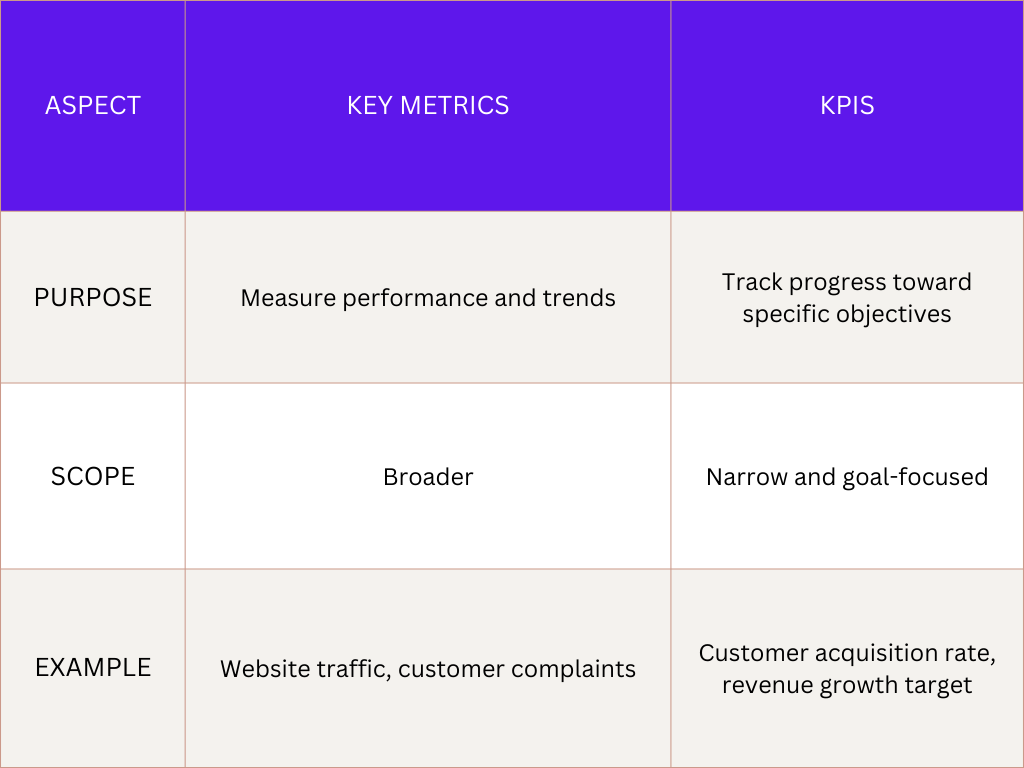
In practical terms, Key Metrics often overlap with Key Performance Indicators (KPIs), but there’s a subtle difference. KPIs are specific goals tied to strategic objectives, while Key Metrics include any essential measure that helps assess performance.

Why Key Metrics Matter

  • Focus: They prevent teams from getting lost in irrelevant data.

  • Alignment: Ensure all departments work toward the same objectives.

  • Insight: Provide actionable information to guide decisions.

  • Accountability: Help track performance and outcomes consistently.

By monitoring the right Key Metrics, organizations can transition from reactive problem-solving to proactive, data-driven decision making.

How Key Metrics Support Business Success

Measuring the right Key Metrics allows businesses to evaluate effectiveness and optimize strategies in real time. This approach turns raw data into insights that inform everything from marketing campaigns to operational processes.

Some ways Key Metrics drive business success include:

  • Tracking growth trends: Revenue, customer acquisition, and retention rates.

  • Identifying bottlenecks: Operational or process inefficiencies.

  • Enhancing customer satisfaction: Service quality and response times.

  • Measuring ROI: Understanding the impact of campaigns and initiatives.

Companies that actively monitor Key Metrics are better positioned to make decisions that deliver long-term results. Research from McKinsey highlights that organizations leveraging data effectively outperform peers by 5-6% in productivity and profitability. 

Choosing the Right Key Metrics

Not every metric is meaningful. Selecting the right Key Metrics is essential to ensure focus and effectiveness. Here’s a structured approach:

Step 1: Align Metrics With Business Objectives

Start by defining strategic goals. For instance, if a company wants to increase customer loyalty, relevant Key Metrics could include repeat purchase rate, net promoter score, or churn rate.

Step 2: Prioritize Actionable Metrics

Focus on measures that inform decisions and trigger action. Vanity metrics like total website hits may look impressive but don’t indicate progress.

Step 3: Ensure Measurability

A Key Metric must be quantifiable, consistent, and easy to track over time. Clear definitions prevent confusion across teams.

Step 4: Set Realistic Targets

Define thresholds, benchmarks, or goals for each metric to assess performance accurately. This step transforms data into a Key Performance Indicator (KPI) framework.

Step 5: Review and Adjust Regularly

Business environments evolve, so periodically reassess your Key Metrics to maintain relevance. Teams should refine and adapt metrics based on operational and strategic insights.

Key Performance Indicators vs Key Metrics

While often used interchangeably, Key Metrics and KPIs serve slightly different purposes:
 
Key Metrics

Understanding this distinction ensures businesses focus on measures that truly drive business performance metrics.

KPI Tracking: Making Metrics Actionable

Having Key Metrics is only useful if they are actively monitored. KPI tracking enables teams to see trends, identify issues, and respond promptly.

Best Practices for Effective KPI Tracking:

  1. Centralized Dashboards: Use business intelligence tools to consolidate data.

  2. Automated Reporting: Reduce manual effort and improve accuracy.

  3. Real-Time Monitoring: Quickly detect deviations or anomalies.

  4. Role-Based Access: Ensure team members see relevant metrics for their functions.

  5. Contextual Insights: Pair metrics with explanations to inform decisions.

By implementing structured KPI tracking, businesses maintain focus and promote measuring business success consistently.

Business Metrics to Consider

Depending on your industry and strategic objectives, common business performance metrics include:

  • Financial Metrics: Revenue growth, profit margins, cost per acquisition

  • Customer Metrics: Retention rate, customer satisfaction score, lifetime value

  • Operational Metrics: Order fulfillment time, defect rate, efficiency ratios

  • Employee Metrics: Engagement, productivity, turnover rates

Selecting the right set ensures teams have clarity on what drives organizational performance.

The Role of Data-Driven Decision Making

Data-driven decision making is the backbone of using Key Metrics effectively. It empowers teams to base their actions on measurable outcomes rather than assumptions or gut feeling.

Benefits include:

  • Improved Accuracy: Reduces errors from subjective judgments.

  • Predictive Insights: Spot trends before they become problems.

  • Cross-Team Alignment: Shared metrics create a single version of truth.

  • Faster Decisions: Real-time data informs timely action.

Modern tools now make data-driven decision making accessible to non-technical users, creating a culture of accountability and informed execution.

Implementing a Data-Driven Culture With Key Metrics

Creating a data-driven culture ensures Key Metrics are not ignored after initial enthusiasm. Key strategies include:

  1. Leadership Buy-In: Leaders should model metrics-focused decision making.

  2. Training and Enablement: Teach teams how to interpret and act on metrics.

  3. Regular Reviews: Use weekly or monthly check-ins to discuss trends.

  4. Visual Dashboards: Make metrics accessible and understandable to all stakeholders.

  5. Reward Insights: Recognize teams that leverage metrics for improvements.

Partnering with analytics experts like Engine Analytics can accelerate adoption and provide tailored solutions for your organization.

Common Mistakes in Key Metric Management

Even experienced organizations struggle with Key Metrics if mismanaged. Common pitfalls include:

  • Tracking too many metrics, causing confusion.

  • Focusing on vanity metrics instead of actionable indicators.

  • Ignoring context or qualitative factors behind numbers.

  • Delayed reporting leading to outdated insights.

Avoiding these mistakes ensures metrics drive measuring business success, not just documentation.

Key Metrics

Using Dashboards to Track Key Metrics

Dashboards are central to effective KPI tracking. They consolidate multiple metrics into one view, providing actionable insight at a glance.

Key Dashboard Features:

  • Customizable views by role or function

  • Visual indicators like graphs, trends, and alerts

  • Drill-down capabilities for deeper analysis

  • Integration with multiple data sources

Well-designed dashboards encourage frequent use and reduce reliance on manual reports.

Aligning Metrics With Strategic Goals

Metrics are most effective when clearly linked to organizational objectives. By mapping Key Metrics to goals:

  • Teams know which data matters most

  • Progress becomes measurable and transparent

  • Leaders can allocate resources based on evidence

This approach ensures business performance metrics drive decisions that align with overall strategy.

Leveraging Technology for Metrics Management

Modern business intelligence and analytics tools make tracking Key Metrics easier and more accurate. Capabilities include:

  • Real-time data aggregation

  • Automated alerts for deviations

  • Predictive analytics for trend forecasting

  • Secure and auditable reporting

Organizations leveraging technology for KPI tracking see faster adoption and improved data-driven decision making outcomes.

Measuring Business Success With Key Metrics

Ultimately, measuring business success depends on actionable metrics. Organizations must:

  • Define success clearly

  • Use metrics aligned with outcomes

  • Regularly evaluate performance

  • Adjust strategies based on insights

These practices transform raw data into a competitive advantage, enabling sustainable growth.

Conclusion: Turn Metrics Into Actionable Insights

Identifying and tracking Key Metrics is essential for any organization seeking sustained growth and performance. When aligned with strategic goals and supported by robust KPI tracking, these metrics empower teams to make informed decisions, optimize operations, and measure success accurately.

Take the first step toward transforming your data into actionable insights. Explore solutions at Engine Analytics or connect through the Contact Page to start leveraging metrics that truly matter.

Here’s Some Interesting FAQs for You

Key Metrics are measurable indicators that show how well a business is performing against its goals. They help leaders and teams track progress, focus on priorities, and identify areas for improvement. By highlighting trends and performance patterns, Key Metrics turn raw data into actionable insights. Common examples include revenue growth, customer retention, and operational efficiency. They are essential for supporting data-driven decision making. Regular monitoring ensures businesses stay aligned with strategic objectives.

Choosing effective KPIs starts with aligning them to your organization’s strategic goals. Focus on metrics that are actionable and provide meaningful insights. Ensure they are measurable, set realistic targets, and regularly review them for relevance. For example, tracking Net Promoter Score (NPS) helps improve customer satisfaction. Good KPIs help teams make informed decisions and prioritize efforts effectively. They also integrate with business performance metrics to support long-term growth.

KPI tracking ensures that Key Metrics are continuously monitored and remain actionable. Regular tracking helps organizations spot trends early and respond proactively to issues. It creates accountability by clearly showing who is responsible for each metric. Tracking also helps evaluate the success of initiatives and strategies. By making metrics visible, teams can align better across departments. Ultimately, KPI tracking transforms numbers into tools for measuring business success.